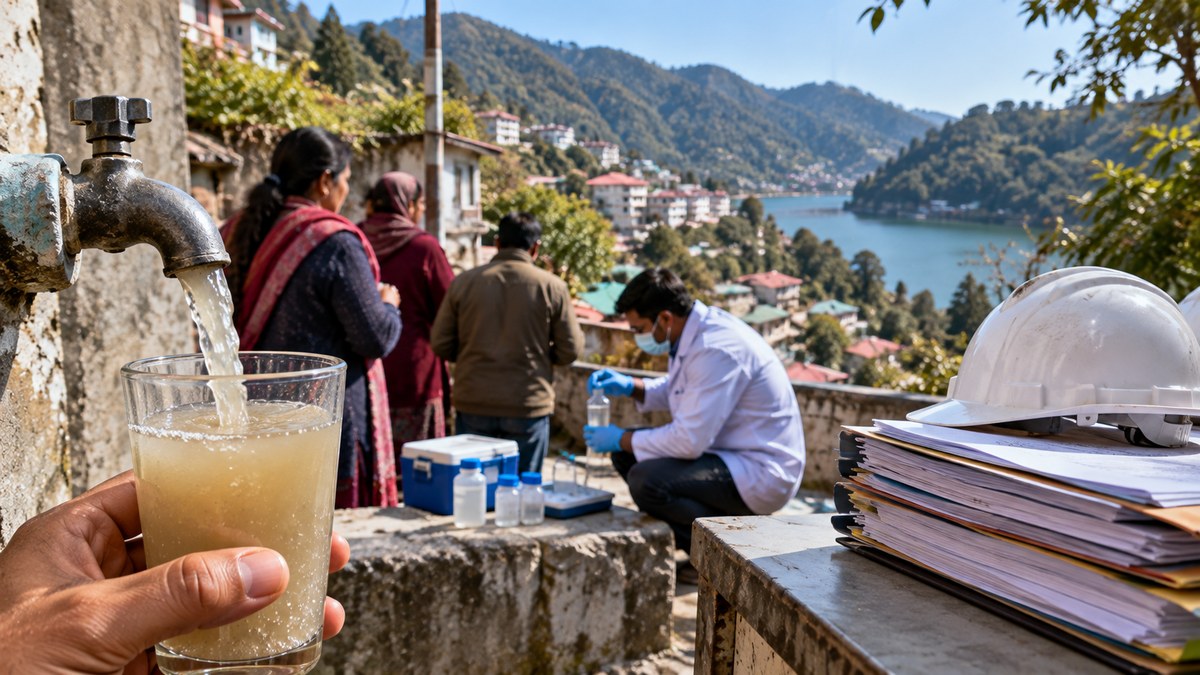
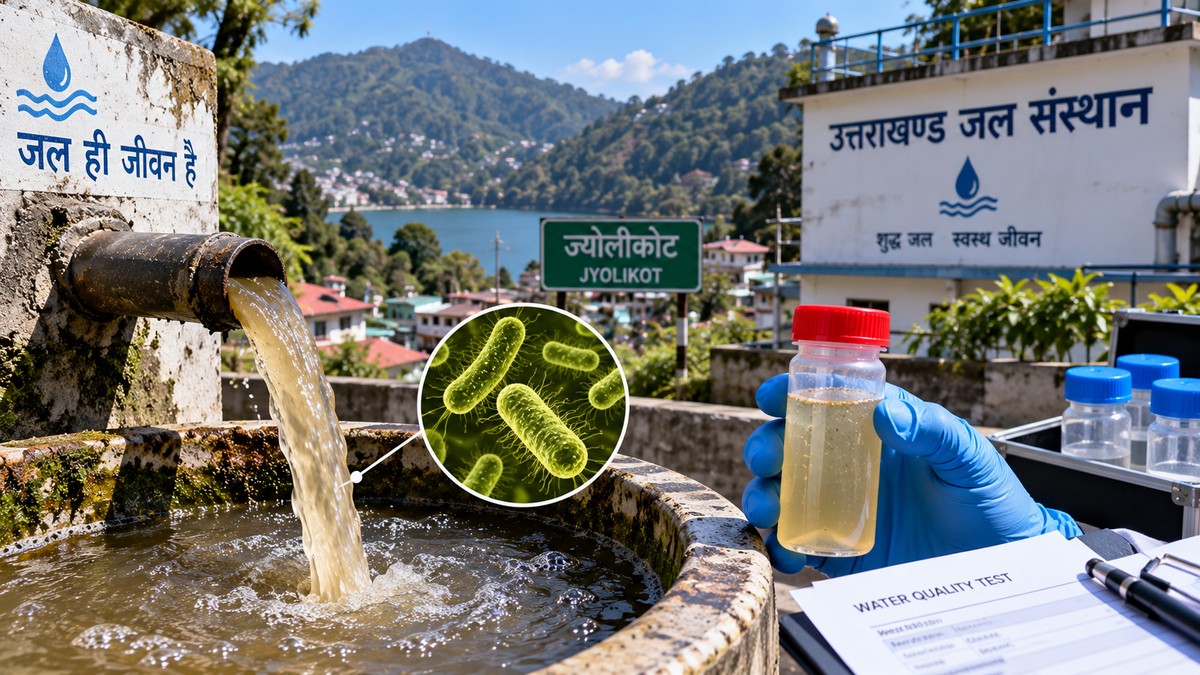
Drinking-water samples from Jeolikot and surrounding areas of Nainital district have tested positive for high levels of faecal bacteria, raising serious concerns about the safety of household water supplies and the response of local authorities.
The Pollution Control Board collected samples from 10 locations on 8 September. Testing was conducted at laboratories in Haldwani and Dehradun. The results indicated contamination associated with human or animal waste in the sampled water.
The findings have also raised questions about routine checks carried out by the Jal Sansthan. Anurag Negi, the board’s regional officer, said a departmental team had been sent to collect fresh samples for confirmation.
Test results and locations
The report recorded bacterial counts ranging from 170 to 2200 per 100 ML of water. The listed sampling points included Manora, Beluwakhan, Malla Beluwakhan and Chinagaon in Veerbhatti.
Other reported locations were near Parvati Prema Jagati School, the Deubaganja water tank, the PMGSY office, the Bushgaon water tank in Chaupra and the Sariyatal tank. The results cover water supplied across Jeolikot and nearby areas.
Faecal coliform and faecal streptococci are associated with the faeces of humans and animals. Their presence in water can indicate sewage or waste contamination, according to the information provided with the test findings.
Reported health impact
The contamination has been linked in the report to an outbreak of water-borne illnesses, including jaundice, typhoid and vomiting and diarrhoea. Reported symptoms also include stomach pain and high fever.
The material states that more than 250 people have fallen ill. It gives the reported death toll as between 2 and 3, naming 16-year-old student Ritesh Jina and 26-year-old Neema Joshi among those who died.
Because the available account gives a range rather than one confirmed total, the number of deaths remains unclear in the supplied information. The report does not provide a separate official reconciliation of the figures.
Children and older people may face greater health risks from contaminated water because of weaker immune responses. The reported illnesses make the quality of drinking water a pressing public-health concern for communities around Jeolikot.
High Court seeks action
The Nainital High Court has taken cognisance of the matter and reprimanded officials and the Jal Sansthan. The court was told that villagers had complained for a long period about foul-smelling water, yet timely action was not taken.
The court directed Uttarakhand’s chief secretary to supervise the matter directly. It also ordered fresh testing across the Nainital area and sought responses from the officials concerned.
The next reported step is the collection and examination of new samples by the departmental team. Those results are expected to help confirm the earlier laboratory findings and clarify the scale of contamination.
Conclusion
The available findings point to serious bacterial contamination in water supplied around Jeolikot, while the reported illness and deaths have intensified scrutiny. Fresh sampling, wider testing and direct supervision by the chief secretary are the stated next steps.
Frequently Asked Questions
Q. Where was the contaminated water reported?
The affected supplies were reported in Jeolikot and nearby areas of Nainital district.
Q. Who tested the water samples?
The Pollution Control Board collected the samples and had them examined in laboratories in Haldwani and Dehradun.
Q. When were the samples collected?
The samples were collected on 8 September.
Q. What bacterial levels were recorded?
The reported counts ranged from 170 to 2200 per 100 ML of water.
Q. Which bacteria were identified?
The report referred to faecal coliform and faecal streptococci.
Q. How many people were reported ill?
More than 250 people were reported to have fallen ill.
Q. How many deaths were reported?
The supplied information gives a range of between 2 and 3 deaths and names Ritesh Jina and Neema Joshi among them.
Q. What has the High Court ordered?
The court directed the chief secretary to supervise the case, ordered fresh testing across Nainital and sought responses from officials.