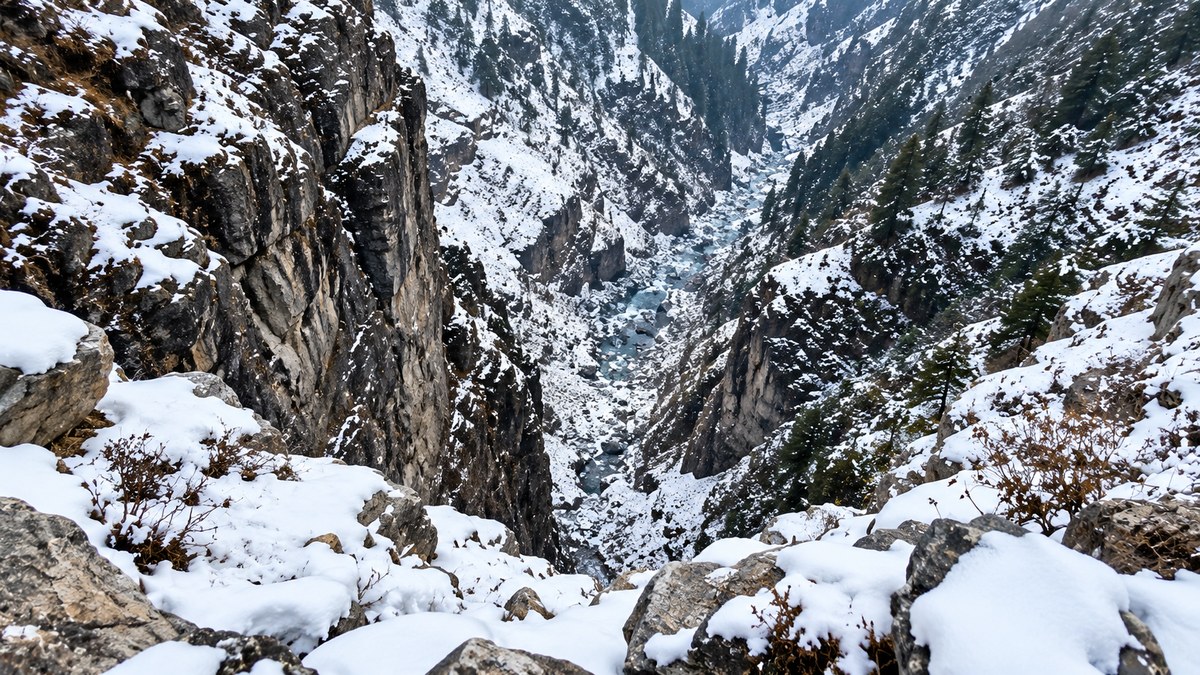


Residents seeking a motor road to Krishna Pur face a setback after geologists described construction through Ballianala as highly challenging. The inspection found that the area’s unstable rock formations may not withstand the weight and vibrations of vehicles.
Experts warned that renewed cracking in the fractured rock could increase the danger and make future maintenance more difficult. The findings have reduced the immediate prospects of building the route through the sensitive slope.
Inspection examines road feasibility
The inspection was carried out on Saturday by Bhaskar Patni, chief of NHPC UTEC and the geological expert currently responsible for Ballianala, and geotechnical engineer Bhavesh Pandey. Irrigation Department officials accompanied them during the assessment.
Residents of Krishna Pur also presented their concerns. They highlighted difficulties during emergencies and the problems faced by students, pregnant women and elderly people because the area lacks a road connection.
Officials are considering an alternative route from across Sipahidhara to provide road access to the locality. However, further action will require another survey by specialists, followed by technical and financial approvals.
The inspection team acknowledged that the absence of road access is a serious problem for Krishna Pur residents and said their demand for a motor road was justified. However, earlier surveys conducted before work in Ballianala found that the rocks were fractured and had changed into soil-like material.
Specialists, including experts from IIT Roorkee, had identified the geological challenge. As a result, the detailed project report included cable anchoring, rock anchoring, piling, SDA and other treatments.
Residents continue protest
People demanding the Krishna Pur road continued their sit-in at Tallital Daanth on Saturday. The protest has now continued for 20 days.
Former municipal councillor Kailash Rautela said residents did not see a clear road possibility after receiving information about the geological survey. He said protesters would consult among themselves before deciding whether to intensify the campaign.
Residents are also discussing a torchlight procession and a protest strategy in the Ballianala work area. Their demand is linked to emergency access as well as the daily needs of people who must travel without a motor road.
Landslide concerns remain
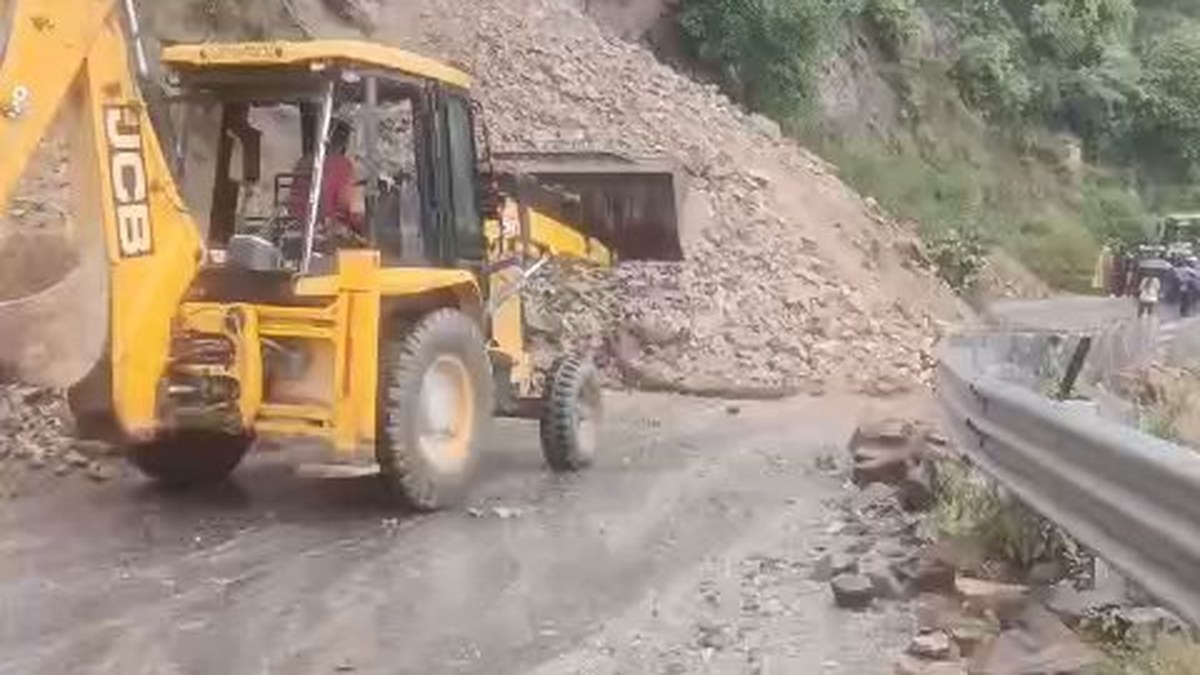
The road debate comes as Ballianala continues to face erosion and landslide risks despite safety work. Landslides in Toota Pahad, Kailakhan and Durgapur Nursery during the current monsoon have renewed concerns about the area’s protection.
Officials and local residents have raised the need to channel water up to Veerbhatti Bridge to control soil erosion. Ballianala has been considered sensitive since the city’s residential expansion in about the 1980s. A landslide in the area previously affected the prominent Rais Hotel site.
Landslides during the past decade increased the threat to GIC, Harinagar, Sipahi Dhara and Krishna Pur. Works costing about 300 crore rupees have helped protect some locations, but the latest monsoon incidents have again highlighted gaps in protection.
A team from ULMC recently visited the area. Attention has now turned to managing the water flow up to Veerbhatti Bridge, which residents believe is important for the safety of the vulnerable slopes.
Earlier channelisation proposal
Former municipal vice-president D.N. Bhatt said a high-power committee had recommended in 1974 that water be channelled from Tallital Daanth towards Veerbhatti. The proposal involved building a 2.2-kilometre fall beyond the existing 22-fall stretch up to Harinagar.
Rautela said erosion could be controlled only by channelising the water. He also questioned the arrangement for water falls in the Ballianala protection project.
Assistant engineer Pramod Pathak said firm safety arrangements had been made along the water flow up to the current Ballianala protection works. About one kilometre remains between that point and Veerbhatti, he said.
According to Pathak, construction of a fall and additional protection work in the remaining section can be considered only after expert advice. The Irrigation Department is waiting for directions from higher authorities.
Conclusion
The geological inspection has found serious limitations for a direct Krishna Pur road through Ballianala. Residents continue to seek access, while officials must first complete further surveys, obtain approvals and assess safer alternatives and water-management work.
Frequently Asked Questions
Q. Why has the proposed Krishna Pur road faced a setback?
The Ballianala rocks are fractured and soil-like, and experts said they may not withstand vehicle weight and vibrations.
Q. How long have residents been protesting?
Residents have continued their protest for 20 days.
Q. What alternative route is being considered?
Officials are considering a route from across Sipahidhara.
Q. What approvals are required before further action?
A fresh specialist survey and technical and financial approvals are required.
Q. Which areas have recently reported landslides?
Toota Pahad, Kailakhan and Durgapur Nursery have reported landslides during the current monsoon.
Q. What water-management measure has been proposed?
Officials and residents have called for water to be channelled up to Veerbhatti Bridge.
Q. What did the 1974 committee recommend?
It recommended a 2.2-kilometre fall beyond the existing 22-fall stretch towards Veerbhatti to channel water.