
Uttarakhand has increased disaster assistance for affected households, fishers, artisans and public infrastructure, according to an update shared by the Uttarakhand Chief Minister’s Office. The revised standards raise support for repairs, replacement and immediate restoration work across the state.
The changes include higher assistance for boats, fishing nets, fisheries inputs, damaged houses, huts, cattle sheds and tools used by handicraft and handloom workers. Funding limits have also been increased for roads, bridges, drinking-water schemes, minor irrigation, electricity, schools, health centres and community assets.
Higher support for fisheries and household damage
Boat repair assistance has been increased from ₹6,000 to ₹8,000. Support for a new boat has risen from ₹15,000 to ₹19,000. Net repair assistance has increased from ₹3,000 to ₹4,000, while support for a new net has risen from ₹4,000 to ₹5,100.
The subsidy for fish seed and inputs has been raised from ₹10,000 to ₹13,000 per hectare. Handicraft and handloom workers will receive ₹6,500 for tools and raw materials, up from ₹5,000.
For fully damaged houses in plain areas, assistance has increased from ₹1.20 lakh to ₹1.60 lakh per house. In hilly and difficult areas, the amount has risen from ₹1.30 lakh to ₹1.70 lakh per house.
For partially damaged pucca houses, assistance has increased from ₹6,500 to ₹8,500 per house. For partially damaged kutcha houses, it has risen from ₹4,000 to ₹5,500.
Support for a completely destroyed hut has increased from ₹8,000 to ₹10,500. Assistance for a damaged cattle shed has risen from ₹3,000 to ₹4,000.
Revised limits for roads and public services
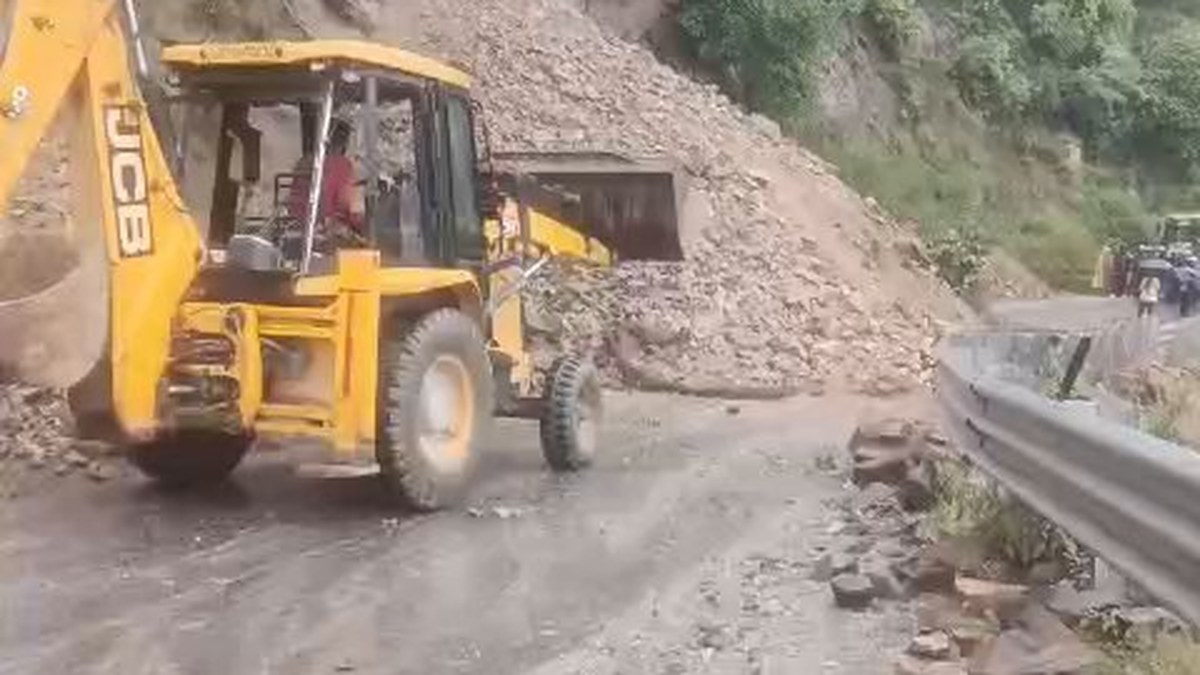
The updated standards also cover immediate repair and restoration of disaster-damaged public infrastructure. The listed sectors include roads and bridges, drinking-water supply, minor irrigation, electricity, primary and secondary schools, primary and community health centres, and panchayat and community assets.
For state highways, MDRs and major district roads, assistance in normal areas has increased from ₹01 lakh to ₹1.30 lakh per kilometre. In mountainous areas, it has risen from ₹1.25 lakh to ₹1.60 lakh per kilometre.
For rural and village roads, including culverts, the limit has increased from ₹60,000 to ₹80,000 per kilometre in normal areas. The amount for mountainous areas has risen from ₹75,000 to ₹01 lakh per kilometre.
The same revised limits apply to repairs of RCC culverts and bridges: ₹80,000 per kilometre in normal areas, up from ₹60,000, and ₹01 lakh per kilometre in mountainous areas, up from ₹75,000.
Immediate restoration assistance for a damaged drinking-water scheme or unit has increased from ₹02 lakh to ₹2.60 lakh per scheme or unit. Assistance for minor irrigation works, excluding major and medium irrigation projects, has also risen from ₹02 lakh to ₹2.60 lakh per work.
Electricity, schools and health centres
Assistance for an electricity pole has increased from ₹5,000 to ₹6,500 per pole. Support for repairing damaged low-tension lines has risen from ₹50,000 to ₹70,000 per kilometre.
Replacing a damaged distribution transformer will now attract assistance of ₹1.30 lakh, up from ₹01 lakh per transformer. Damage to a school building will qualify for ₹2.60 lakh per building, compared with the earlier limit of ₹02 lakh.
Assistance for damage to a primary or community health centre has also increased from ₹02 lakh to ₹2.60 lakh per health-centre unit. Support for damaged panchayat and community assets has risen from ₹2.50 lakh to ₹3.20 lakh per unit.
Administration to oversee delivery
Secretary of Disaster Management and Rehabilitation Vinod Kumar Suman said the higher standards approved by the central government would help make relief and reconstruction work more effective in disaster-affected areas of the state.
The Uttarakhand Chief Minister’s Office said directions would be issued to the concerned departments and district administrations. The stated aim is to deliver the revised assistance to affected people quickly, transparently and effectively.
Conclusion
The revised standards increase disaster assistance across household recovery, fisheries, livelihoods and essential public infrastructure. Their practical impact will depend on timely implementation by the concerned departments and district administrations.
Frequently Asked Questions
Q. What fisheries assistance has been increased?
Boat, net, fish-seed and input assistance has been raised. Boat repair support is now ₹8,000, while a new boat attracts ₹19,000.
Q. How much support is available for a fully damaged house?
Assistance is ₹1.60 lakh per house in plain areas and ₹1.70 lakh in hilly or difficult areas.
Q. Has assistance for partially damaged houses changed?
Yes. Support is ₹8,500 for a partially damaged pucca house and ₹5,500 for a partially damaged kutcha house.
Q. Which public infrastructure sectors are covered?
The revised standards cover roads, bridges, drinking water, minor irrigation, electricity, schools, health centres, and panchayat or community assets.
Q. Who will implement the revised standards?
The concerned departments and district administrations will be directed to deliver the revised assistance to disaster-affected people.