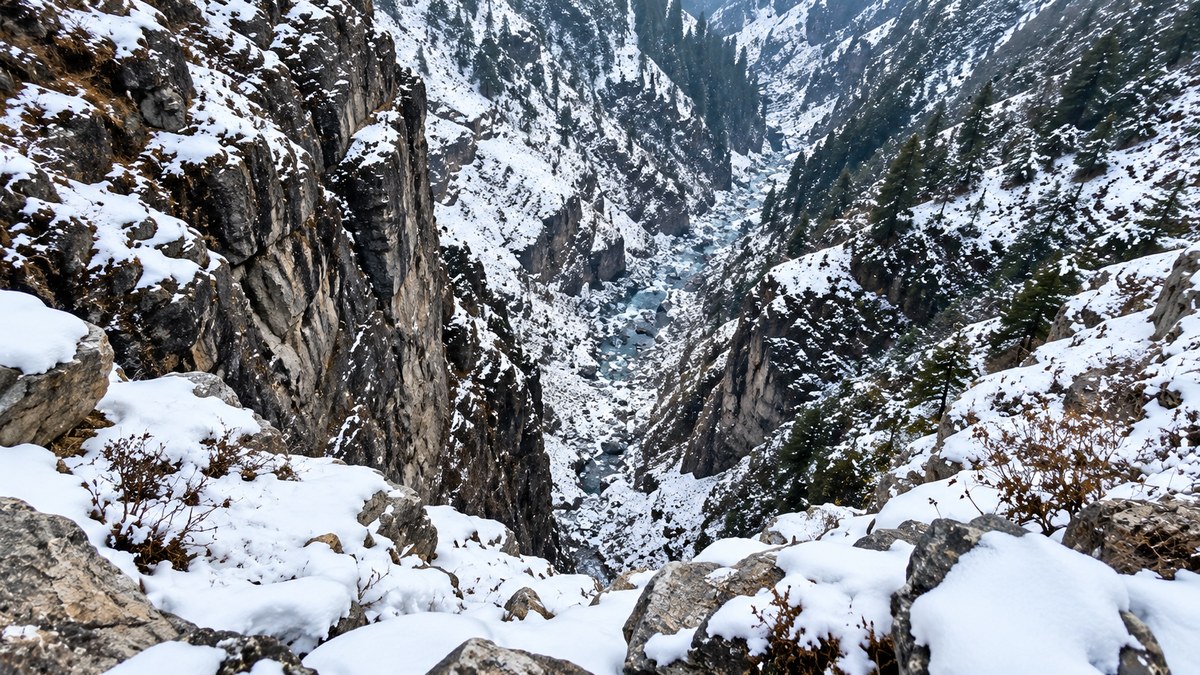


The health of the Song River will be assessed through its wildlife and surrounding biodiversity under a new 6-month bio-indicator project launched by the Spring and River Rejuvenation Authority (SARRA). The study will examine whether the river’s apparently clear water is also supporting a healthy ecosystem.
The survey will extend for about 80 KM, from the river’s origin at Kaddukhal in Tehri to its confluence with the Ganga at Tehri Farm in Dehradun. Researchers will establish 36 permanent sampling stations, divided equally among the upper, middle and lower sections of the river.
The project is intended to create scientific evidence about ecological conditions along the Song River, regarded as a lifeline for eastern Doon. It will help identify sections where the ecosystem remains stronger and areas facing greater pressure from human activity.
Wildlife will act as ecological indicators
The study will use 5 major biological groups as indicators of the river’s condition. The material identifies the following groups for assessment:
- Aquatic insects and their larvae, including macroinvertebrates that respond sensitively to pollution. Their species and numbers will provide indications of water quality.
- Butterflies and wild bees, whose presence can reflect riverbank vegetation, natural habitats and pollination conditions.
- Dragonflies and damselflies, which will help assess water cleanliness and the condition of the surrounding environment.
- Bird species found across the river valley, which will contribute to an assessment of the wider river corridor and its biodiversity.
Together, these indicators are expected to provide a broader picture than a water-only examination. The survey will consider the river, its banks and the habitats connected to the waterway.
2 field surveys planned
Fieldwork will take place in 2 phases between November and April. The first phase will follow the monsoon, while the second will be conducted before the monsoon.
Comparing the 2 sets of observations will help researchers examine seasonal changes and their effect on the river’s ecology. The study will be carried out under the guidance of Dr. VP Uniyal, a former senior professor and Scientist ‘G’ at the Wildlife Institute of India.
The 36 stations will allow observations to be compared across the upper, middle and lower stretches. This structure is intended to show how ecological conditions vary along the river’s course.
Baseline for future conservation decisions
A key outcome will be a baseline database for the Song River. Such a record will provide a scientific reference for comparing future changes in the river’s condition.
The findings could help assess the effects of the proposed Song Dam. They will also support understanding of how mining, urbanisation and other human activities are affecting natural habitats along the river.
The study is expected to assist conservation planning and the identification of environmentally sensitive areas. Its approach treats the Song not only as a water source, but as a connected ecosystem that includes aquatic life, riverbank habitats and the wider river corridor.
Conclusion
SARRA’s 6-month survey will use biodiversity across 36 stations and 80 KM of the Song River to establish an ecological baseline and identify areas facing environmental pressure. The results are intended to guide future conservation planning and assessments of development-related impacts.
Frequently Asked Questions
Q. What is being surveyed in the Song River?
The project will assess the river’s ecological health through aquatic insects, butterflies, wild bees, dragonflies, damselflies, birds and surrounding biodiversity.
Q. How long is the survey area?
The study covers about 80 KM, from Kaddukhal in Tehri to the Ganga confluence at Tehri Farm in Dehradun.
Q. How many sampling stations will be created?
There will be 36 permanent sampling stations, with 12 each in the upper, middle and lower sections.
Q. When will fieldwork take place?
Field surveys will be conducted in 2 phases between November and April, after the monsoon and before the monsoon.
Q. Who is guiding the study?
The study is being conducted under the guidance of Dr. VP Uniyal, a former senior professor and Scientist ‘G’ at the Wildlife Institute of India.
Q. Why is the study important?
It will create a baseline database and help assess ecological pressures linked to the proposed Song Dam, mining, urbanisation and other human activities.