
A National Commission for Women inquiry into the Rampur Tiraha violence of October 1-2, 1994, recorded serious allegations against police and district officials who confronted Uttarakhand statehood protesters in Muzaffarnagar.
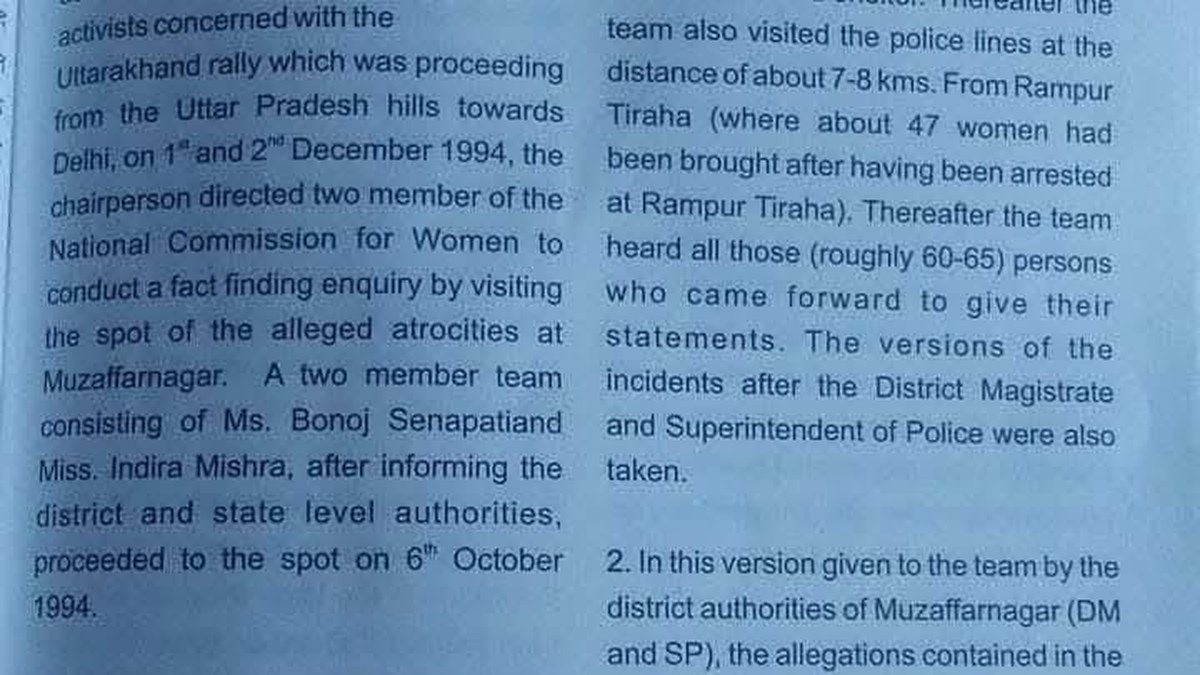
The 2-member team—Bonoj Senapati and Indira Mishra—reached the district 4 days after the incident. It visited Rampur Tiraha, Rampur village, where some affected people had taken shelter, and the police lines where around 47 women were held after their arrest.
The team spoke to 60 to 65 people. Its account differed sharply from the version given by the district administration, which denied wrongdoing.
Conflicting accounts of the violence
The DM and SP told the team that buses had been stopped to search for weapons. They said the protesters became violent and that a lathi charge followed, leaving 5 agitators and 10 police personnel injured.
The NCW team recorded a different account. According to its findings, police struck unarmed women inside buses and on the road with dandas. The report also recorded allegations that 2 women were raped, including one case involving more than one policeman.
It described the situation as “one of uncontrolled rampage” and said women were beaten, molested and stripped. The report also recorded an allegation that one woman was shot in the head while attempting to flee.
Women told the investigators that police personnel taunted them, saying: “You want Uttarakhand? Take this beating instead.” The report said the conduct of officials appeared driven by an intention to take revenge.
Questions raised over the police operation
The commission questioned why the protesters were allowed to travel as far as Muzaffarnagar if the stated purpose was only to find firearms. It noted that searches could have been carried out at Gopeshwar, Tehri or Dehradun, where the rallyists had begun their journey.
The report said the purpose behind allowing the group to proceed was “not clear”. It also concluded that the alleged abuses could not have occurred without “tacit or overt support from the officers”.
The commission recommended action against police personnel and district officials found responsible. It also criticised the shortage of women police during the operation and called for compensation for women who suffered losses.
Another warning in the report concerned institutional impunity. It said giving the police “a free hand just because of its brotherhood” could cause the entire system to collapse.
Death toll and delayed accountability
Contemporary newspaper reports cited 15 deaths, over a hundred injuries and around 150 people missing. Those reports also carried claims that bodies had been buried in fields to conceal the incident. These figures and claims were part of the reporting at the time.
The account states that the first convictions came in 2024, when 2 police personnel received life sentences. It also says that most people identified as responsible in the commission’s findings were never punished.
The violence remains closely associated with the Uttarakhand statehood movement. For people remembering the movement’s history, the Rampur Tiraha episode represents both the risks faced by protesters and the long delay in securing legal accountability.
Conclusion
The NCW findings presented a serious challenge to the official explanation of the Rampur Tiraha crackdown, while later convictions provided only limited accountability for the violence recorded in 1994.
Frequently Asked Questions
Q. When did the Rampur Tiraha violence take place?
The incident took place during the night of October 1-2, 1994, around Gandhi Jayanti.
Q. Where did the National Commission for Women team conduct its inquiry?
The team visited Rampur Tiraha, Rampur village and the police lines in Muzaffarnagar.
Q. Who conducted the NCW inquiry?
Bonoj Senapati and Indira Mishra formed the 2-member team sent by the National Commission for Women.
Q. How many people did the team interview?
The investigators heard 60 to 65 people.
Q. What did the district authorities claim?
The DM and SP said buses were stopped for an arms search and that protesters became violent before a lathi charge took place.
Q. What did the NCW team record?
It recorded allegations of beatings, molestation, sexual assault, extortion and a shooting involving protesters.
Q. What punishments did the commission recommend?
It recommended punishment for responsible police personnel and district officials, along with compensation for affected women.
Q. What convictions were reported later?
The account states that 2 police personnel were sentenced to life in 2024.