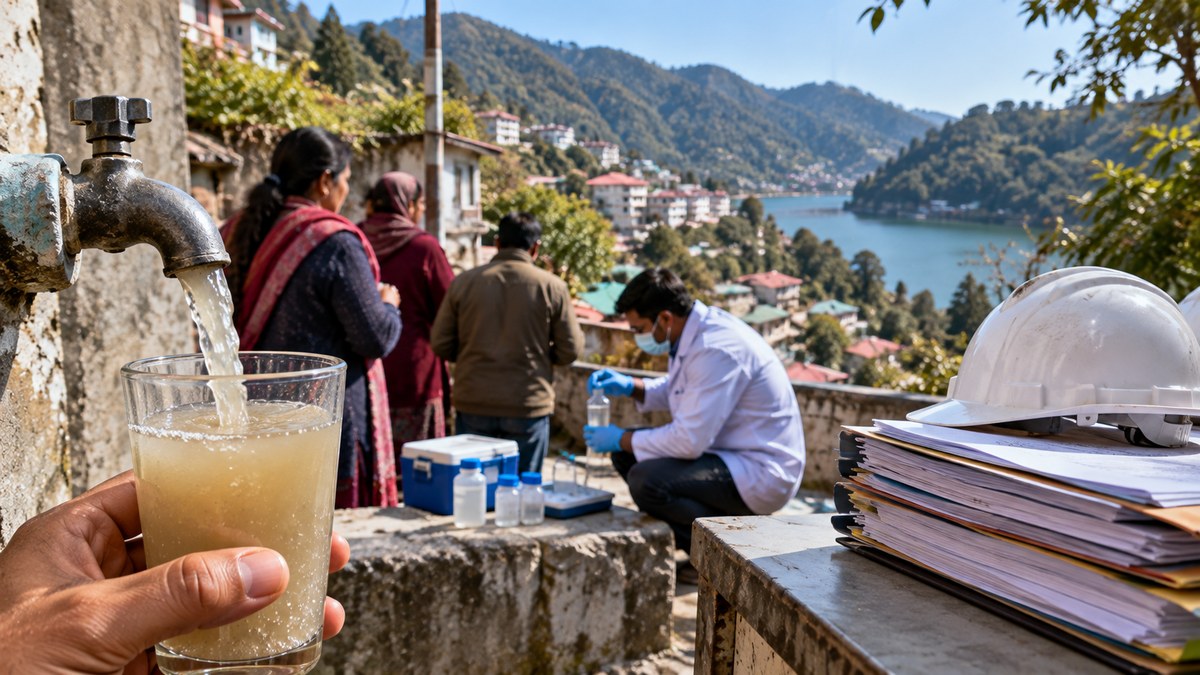
6 engineers from Nainital’s Jal Sansthan and Jal Nigam have been suspended after contaminated drinking water in the Jyolikot area was followed by a serious outbreak of illness. The action came after 2 deaths and illness affecting more than 400 people.
The outbreak involved jaundice and diarrhoea and began on 20 June, according to the available account. Public anger intensified after the deaths, while residents protested over alleged negligence in managing the drinking-water system.
The High Court also took cognizance of the matter. The case concerns the supply of contaminated water, the condition of water sources and claims that officials failed to respond adequately after the health crisis emerged.
3 Jal Sansthan engineers suspended
Jal Sansthan chief general manager D.K. Singh ordered the suspension of 3 engineers on Monday. They are Vishal Kumar, the in-charge superintendent engineer for Haldwani; Mohan Singh Rawat, assistant engineer in Nainital; and Ravindra, additional assistant engineer in Nainital.
Nainital executive engineer Aneesh M. Pillai was issued a warning over alleged negligence in the matter. The available report does not state that he was suspended.
Jal Nigam action followed a district report
Jal Nigam managing director Ranveer Singh Chauhan ordered the suspension of in-charge executive engineer Shashipal Singh. Chief engineer Sanjay Singh separately ordered action against in-charge assistant engineer Sanjay Kumar Arya and junior engineer Deepanshu.
The action against these 3 Jal Nigam engineers followed a report from the district magistrate. At a district planning and departmental review meeting on 22 August, the engineers reportedly gave incorrect information by saying the affected drinking-water line did not belong to their department.
The suspensions cover 6 engineers in total: 3 from Jal Sansthan and 3 from Jal Nigam. The disciplinary action relates to the handling of the water supply and the information given during the official review.
Health response and water-supply measures
After the illness was reported, the Health Department and Jal Sansthan began health camps and door-to-door surveys in the affected areas. They also arranged blood and water testing and started chlorination work.
Other measures included supplying water through tankers, cleaning water tanks and repairing the sewer line. These steps were intended to address both the immediate shortage of safe drinking water and possible contamination risks in the local system.
The case reached the High Court through a public interest litigation filed by Ravi Bisht. The petition alleged that Jal Sansthan and Jal Nigam officials had not taken the cleaning of water sources and water-quality sampling seriously.
It also alleged that officials failed to act despite knowing about the disease outbreak in Jyolikot. Another allegation concerned Jal Nigam officials denying that the affected line was under their department’s control.
These allegations form part of the legal proceedings and should not be treated as a final finding of guilt. The confirmed administrative action so far is the suspension of 6 engineers and the warning issued to the Nainital executive engineer.
Conclusion
The Jyolikot water-contamination case has led to disciplinary action after 2 deaths and more than 400 illnesses. Health checks, chlorination, tanker deliveries, tank cleaning and sewer repairs were undertaken as the authorities faced High Court scrutiny.
Frequently Asked Questions
Q. What happened in Jyolikot?
Contaminated drinking water was followed by an outbreak of jaundice and diarrhoea in the Jyolikot area. More than 400 people fell ill and 2 people died.
Q. How many engineers were suspended?
6 engineers were suspended, with 3 each from Jal Sansthan and Jal Nigam.
Q. Which Jal Sansthan officials were suspended?
Vishal Kumar, Mohan Singh Rawat and Ravindra were suspended. They held superintendent engineer, assistant engineer and additional assistant engineer roles respectively.
Q. What action was taken against Aneesh M. Pillai?
Nainital executive engineer Aneesh M. Pillai received a warning over alleged negligence. The available report does not say that he was suspended.
Q. Why were the Jal Nigam engineers suspended?
Their action followed a district magistrate’s report. At a 22 August review meeting, they reportedly gave incorrect information about whether the affected water line belonged to their department.
Q. What steps were taken after the outbreak?
Authorities organised health camps, household surveys, blood and water testing, chlorination, tanker supplies, tank cleaning and sewer-line repairs.
Q. Did the High Court consider the case?
Yes. The High Court took cognizance after the outbreak, deaths and public concern over the contaminated water supply.
Q. Who filed the public interest litigation?
Ravi Bisht filed the public interest litigation concerning the Jyolikot water-contamination case.