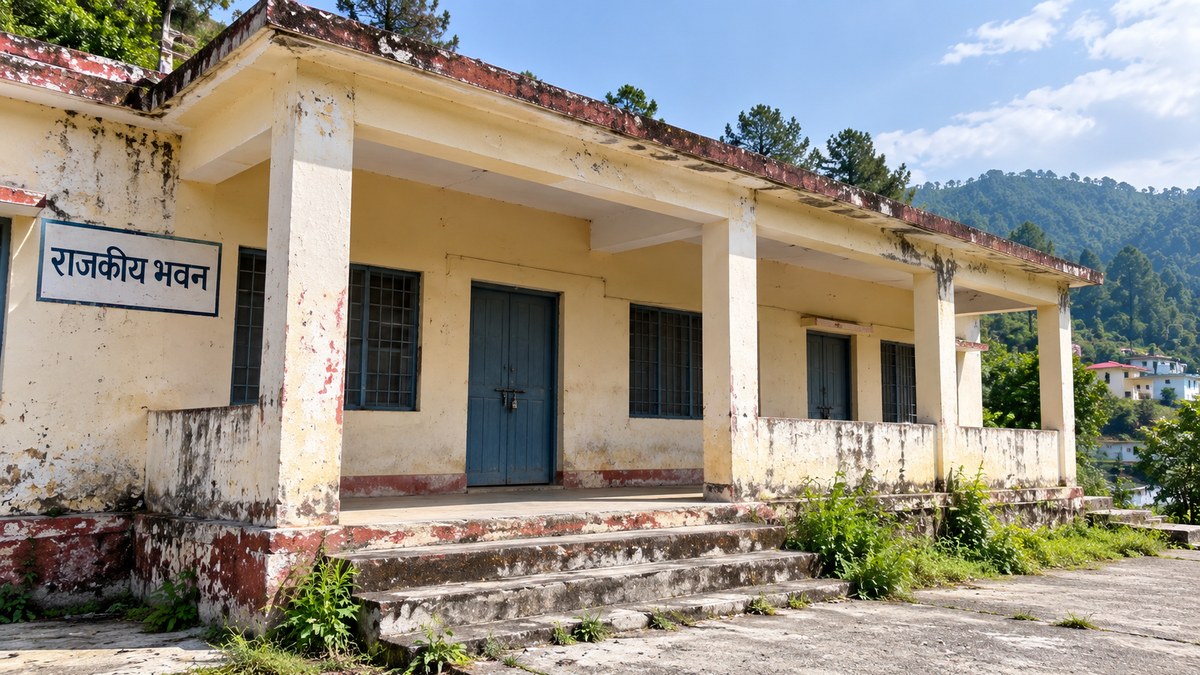
A government school in Champariwath’s frontier area is challenging the notion that public institutions lose students due to lack of resources. Pasam village’s Government Upper Primary School, located near the India-Nepal border, recorded a rise in enrolment over 3 years, growing from 23 students in 2023 to more than 52 in 2026. The lift is attributed to the efforts of the school’s acting principal-cum-science teacher Naresh Chandra Joshi, whose approach broadened learning beyond textbooks and the blackboard. Students were exposed to practical experiments, digital learning, sports, and competitions, while regular parental outreach connected families to school activities. As a result, the school earned a high school upgrade in the same period, enabling local students to pursue higher grades without leaving the village. The expansion benefited border-area families by reducing the need to travel to distant towns for higher classes. Academic outcomes reflected the shift: this year, 3 students qualified for admission to Jawahar Navodaya Vidyalaya through its entrance examination. Students are also participating in Science Olympiad, the Chief Minister’s Meedhavi (Mehdaavi) scholarship program, and various sports events. The school has integrated smart digital boards and smart TVs to enhance instruction. Joshi’s influence extends beyond Pasam; as district science coordinator and master trainer, he shares his methods with other teachers. His work earned the 2024 Shailesh Matiyani State Educational Award for innovation in pedagogy. Pasam’s experience demonstrates that government schools can transform through pedagogical changes, not just resources.
Champawat
Pasam School doubles student count in 3 years as principal’s initiative earns upgrade to high school
In border-area Pasam village, a government school defies the trend of shrinking enrolment. Under an acting principal and science teacher, the school has grown from 23 students in 2023 to over 52 in 2026, and was upgraded to high school this year, boosting access for local students.