
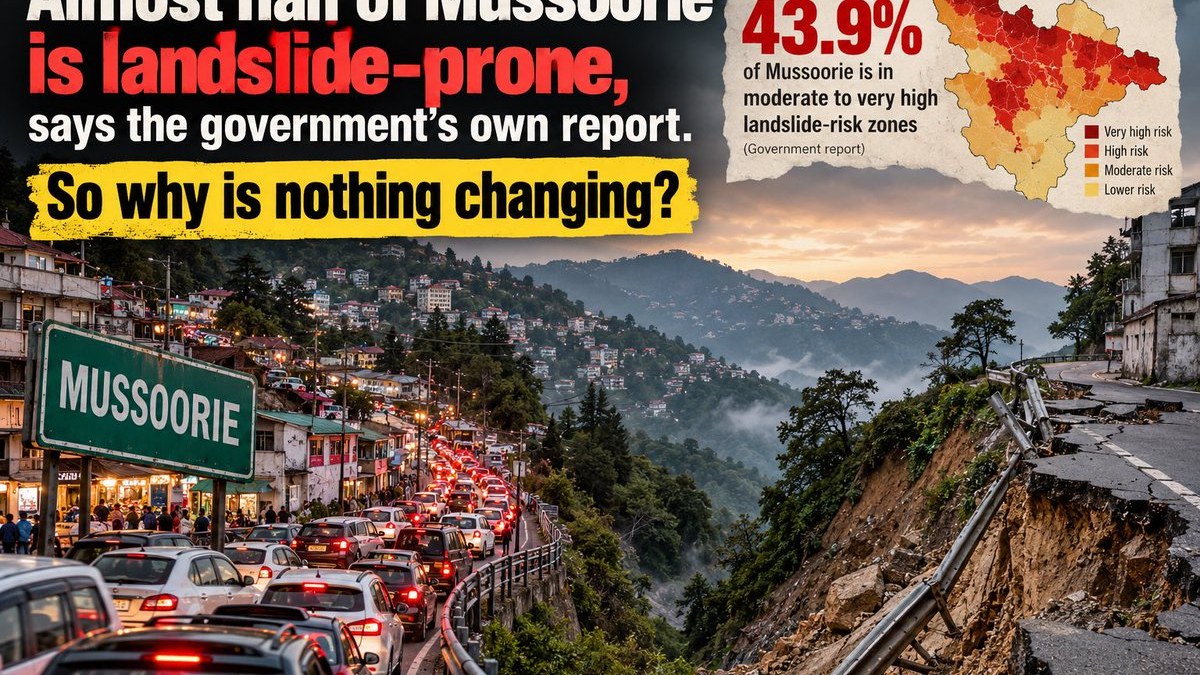
Mussoorie is facing growing pressure from tourism, construction and traffic despite a government report identifying 43.9% of the town as lying in moderate to very high landslide-risk zones. The hill town also falls within seismic zone IV, making planning and construction controls especially important.
The findings have renewed questions about how much development Mussoorie can safely support. Weekend congestion now stretches from Mall Road towards the town’s entry points, while limited parking leaves residents and visitors struggling to move through the hill station.
A 2001 study by the Lal Bahadur Shastri National Academy of Administration had already warned that Mussoorie could not accommodate further construction. Despite that warning, building activity continued, according to the report.
Risk zones and mounting pressure
The state’s assessment identifies places including Bhatta Fall, George Everest, Kempty Fall and Barlowganj as areas requiring special care. The report’s findings have become more significant since Joshimath began sinking in January 2023, prompting wider concern about development in fragile Himalayan settlements.
The National Green Tribunal subsequently took notice of Mussoorie and established a 9-member committee under the Chief Secretary. The committee was asked to assess the town’s capacity for buildings, tourists and vehicles.
Tourism has expanded sharply. Mussoorie received around 8.5 lakh tourists in 2000. By 2019, the number had risen to more than 30 lakh.
The town now has 303 hotels, 201 homestays and more than 17,000 beds. However, parking is available for only about 1,240 vehicles, while the town has just 63 hospital beds. The road network has expanded from 219 km in 1990 to 585 km by 2023, but congestion remains a persistent problem.
Measures recommended in the report
The report listed 19 proposed actions for managing Mussoorie’s environmental and infrastructure risks. These include checking ground conditions before approving major projects and auditing tall buildings every one or 2 years.
It also recommended improving drainage, protecting natural springs, addressing sewage and waste management, and enforcing the plastic ban. Other proposals included registering tourists according to available rooms and parking, and possibly charging visitors a fee for maintaining the town’s cleanliness.
KumaonJagran reported that, 3 years after the recommendations, several observers believe limited progress has been made. In March this year, the National Green Tribunal issued a notice to Uttarakhand’s Chief Secretary over the absence of “substantial action”.
Concerns over plans and implementation
Anoop Nautiyal of Citizens for Green Doon said responses obtained through the Right to Information process indicate that the geographic information system, drainage plan and tourist-registration system have not operated effectively on the ground. A drainage detailed project report was prepared but remained on paper, he said.
The group has also raised concerns about proposed infrastructure projects. Himanshu Arora of Citizens for Green Doon said a planned Mussoorie road through Jhajra could require the removal of 20,000 to 25,000 trees. He also pointed to 2 proposed tunnels near environmentally sensitive locations, including George Everest.
Citizens for Green Doon separately challenged the widening of the Kimadi-Lambidhar-Company Garden road. In September, the group approached the Uttarakhand High Court. The court asked its representatives to meet the Chief Secretary and present their concerns to the government.
The debate is not about ending tourism, which supports Mussoorie’s economy. It is about whether construction, road expansion and visitor growth are being matched by reliable assessments, drainage, waste management, emergency capacity and enforcement.
Conclusion
Mussoorie’s own risk assessment, past warnings and continuing infrastructure pressure point to the need for authorities to determine the town’s safe limits before approving further development. The next step remains the implementation of the recommended safeguards and the response to the concerns raised before the authorities.
Frequently Asked Questions
Q. What proportion of Mussoorie is in landslide-risk zones?
About 43.9% of Mussoorie is in moderate to very high landslide-risk zones, according to the state report.
Q. Which parts of Mussoorie were identified as needing special care?
The report identifies Bhatta Fall, George Everest, Kempty Fall and Barlowganj as areas requiring special care.
Q. How many tourists visited Mussoorie in 2019?
More than 30 lakh tourists visited Mussoorie in 2019, compared with around 8.5 lakh in 2000.
Q. How many hotel and homestay beds does Mussoorie have?
The town has 303 hotels, 201 homestays and more than 17,000 beds.
Q. What did the National Green Tribunal do?
The tribunal formed a 9-member committee under the Chief Secretary to assess Mussoorie’s capacity for buildings, tourists and vehicles. In March this year, it also issued a notice to Uttarakhand’s Chief Secretary over the absence of “substantial action”.
Q. What road project has raised environmental concerns?
Citizens for Green Doon has raised concerns about a proposed Mussoorie road through Jhajra, which Himanshu Arora said could involve cutting 20,000 to 25,000 trees and constructing 2 tunnels near George Everest.