
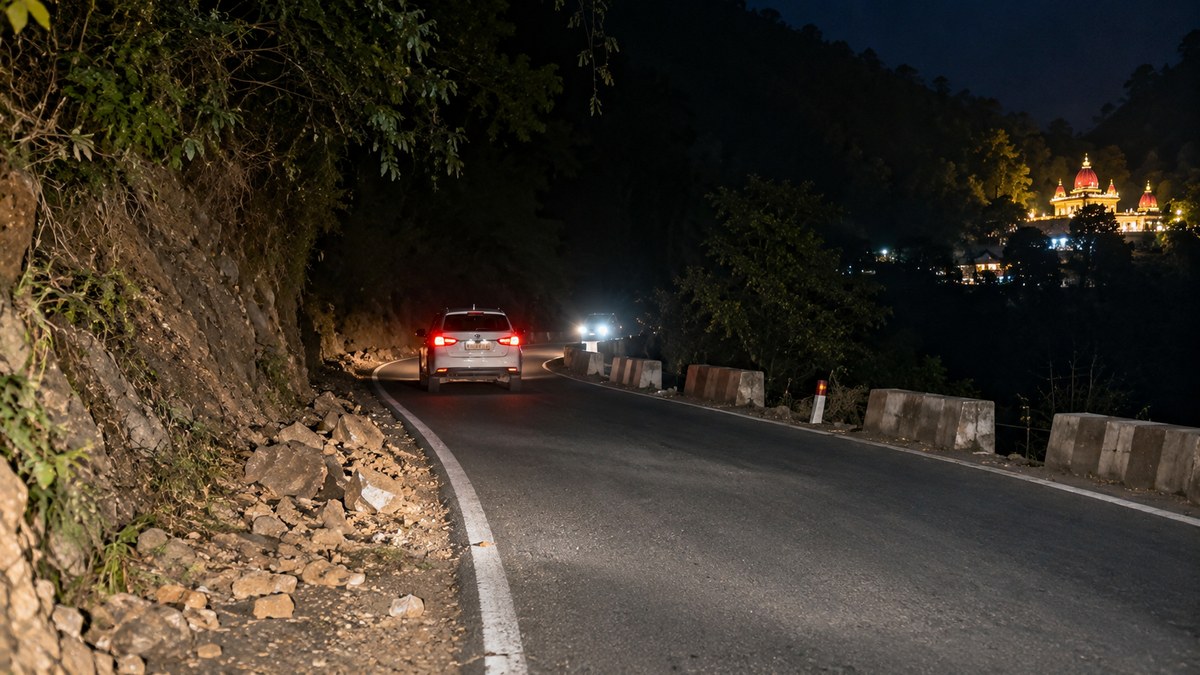
Night travel on the Ranibagh-Bhimtal road to Kainchi Dham remains hazardous, with sharp bends, narrow sections and blind spots often lacking visible reflectors or radium lights. The absence of clear road markings makes it difficult for drivers to judge the road edge and approaching turns in darkness and winter fog.
An Amar Ujala team inspected the route at about 2:30 AM late Friday night and found safety arrangements in poor condition. Several hairpin bends and bottleneck sections appear after the bridge on the Ranibagh-Bhimtal road. At these points, drivers must rely on limited visibility and their own judgement to negotiate turns.
The situation becomes more serious after Saldhi. Reflectors installed earlier have lost their brightness, while some fixed behind parapets are so old or dull that they are barely visible at night. In other places, bushes have covered the reflectors completely.
The newly built sections also do not yet have white edge lines. Without those markings, drivers have fewer visual cues to identify the road boundary, narrow stretches and curves. The condition is especially relevant on a route used regularly by senior district officials as well as residents and visitors.
More tourists travelling during the night
The route has seen increased importance after traffic jams around Kainchi Dham and the roads leading to it drew widespread attention. Police later improved traffic management, but many visitors are now choosing to travel at night to avoid congestion.
According to the report, large numbers of travellers are currently using the road between 12 midnight and 5:00 in the morning. That shift has increased the importance of functioning reflectors, clear lines, warning signs and blind-spot mirrors. In their absence, drivers approaching bends may have little advance indication of the road’s direction.
Traffic mirrors are no longer reliable
3 or 4 traffic mirrors, also known as blind-spot mirrors, have been installed at different points between the bridge and Bhimtal. They are no longer in dependable working condition.
Some mirrors have turned away from the direction of approaching traffic. Others are so dirty that their practical use is almost the same as having no mirror at all. The condition reduces visibility at locations where drivers need an early view of vehicles coming from the opposite direction.
PWD promises markings and safety equipment
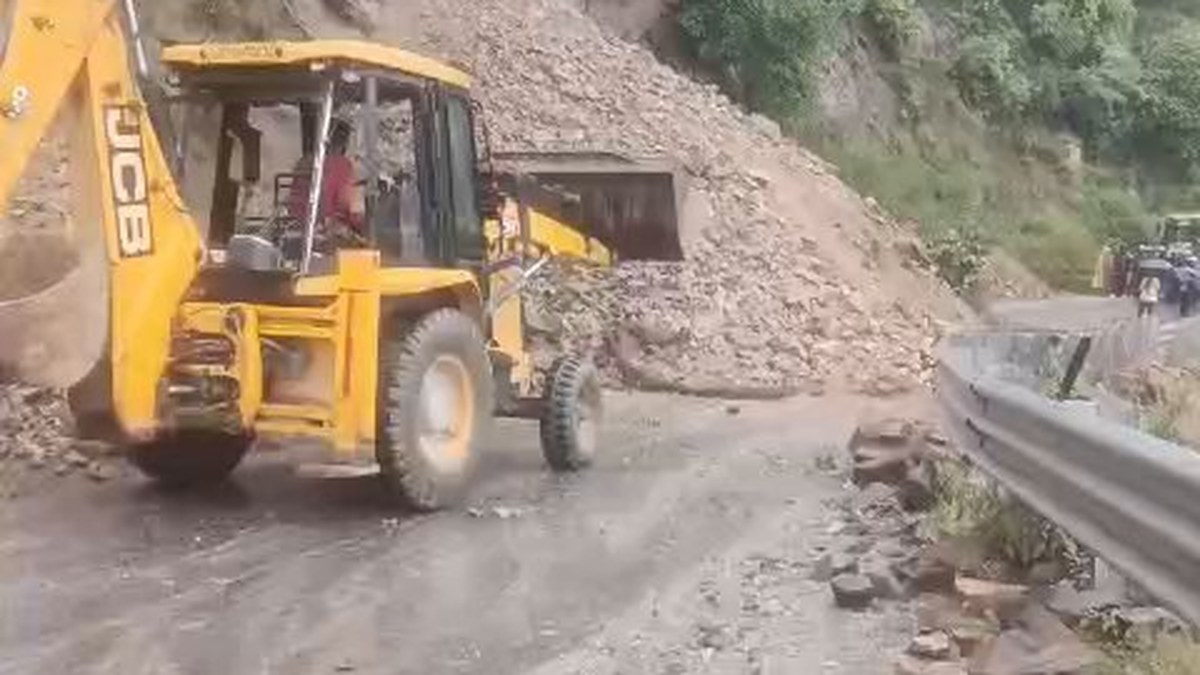
P.S. Brijwal, chief engineer of the Public Works Department, said improvement work and asphalt laying were underway on the Ranibagh-Bhimtal road. He said white lines would be added on both sides after the surfacing work is completed.
Brijwal also said reflectors, radium lights and signboards would be installed at identified locations to help prevent road crashes. His statement links the additional safety work to the completion of the current road improvements.
Dr. Jagdish Chandra, SP Traffic, Nainital, said the road safety committee had already recommended installing reflectors, radium lights and traffic mirrors on the route. He said the Public Works Department would be responsible for carrying out those arrangements because the road is under its control.
The immediate safety issue remains for people travelling before the promised work is completed. Drivers using the route at night must contend with faded equipment, covered reflectors, missing white lines and poorly positioned or dirty traffic mirrors.
Conclusion
The Ranibagh-Bhimtal route to Kainchi Dham currently has gaps in night-time safety equipment, while officials have said markings, reflectors, radium lights and signboards will be added through roadwork and departmental action.
Frequently Asked Questions
Q. Why is night travel on the Ranibagh-Bhimtal road risky?
The route has sharp hairpin bends, bottlenecks and narrow sections where reflectors, radium lights and clear white lines are missing or difficult to see.
Q. Which part of the road has more serious visibility problems?
The report identifies the stretch after Saldhi as particularly serious because drivers often have to judge turns in darkness.
Q. What is the condition of the existing reflectors?
Some have faded, while others are old, covered by bushes or hidden behind parapets.
Q. Are the traffic mirrors working properly?
No. Some are facing the wrong direction, and others are too dirty to provide useful visibility.
Q. When are white road lines expected to be added?
Chief engineer P.S. Brijwal said white lines would be added on both sides after the current asphalt work is completed.
Q. Which department is responsible for the road safety installations?
The Public Works Department is responsible because the road is under its control.
Q. What safety installations have officials proposed?
Officials have referred to reflectors, radium lights, traffic mirrors and signboards at identified locations.