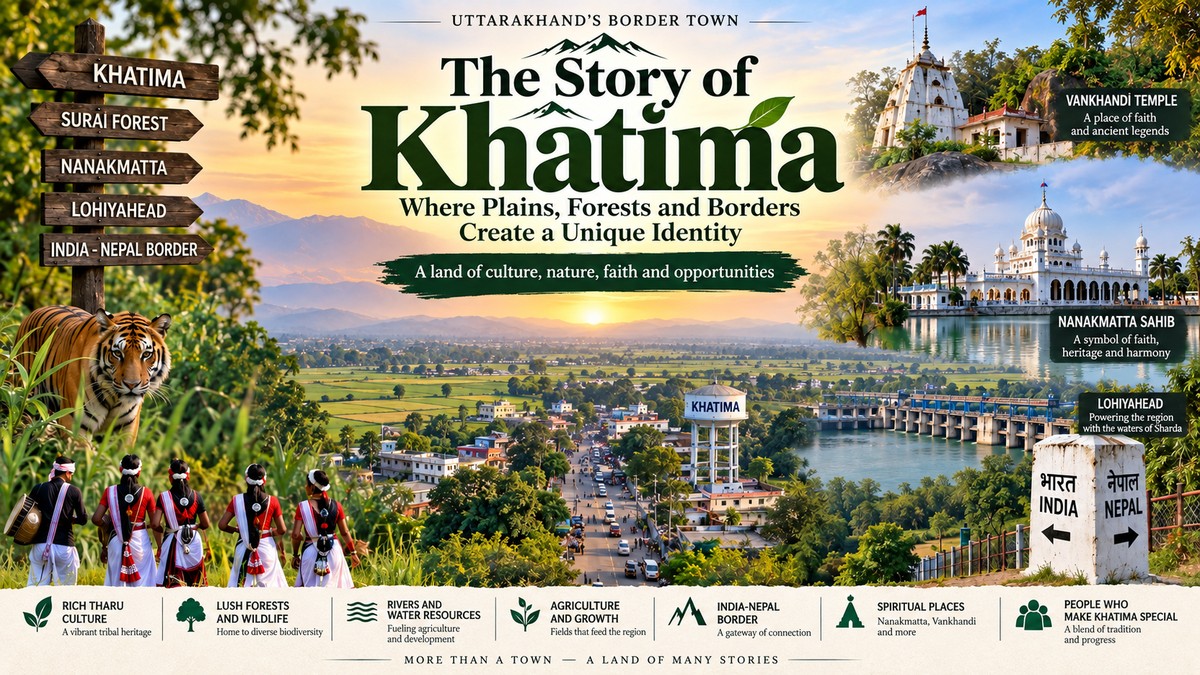
Khatima History: Khatima, located in Udham Singh Nagar district of Uttarakhand and close to the India-Nepal border, is today a well-known town of the Terai region. But have you ever wondered how the town got the name “Khatima”?
It is a simple question, but searching for the answer leads us to an interesting mix of history, local traditions and stories passed down through generations.
There does not appear to be one widely accepted and well-documented historical explanation for the origin of the name Khatima. In the absence of definitive evidence, several local stories associated with the name have survived over the years.
Was Khatima Once Known as ‘Khatma’?
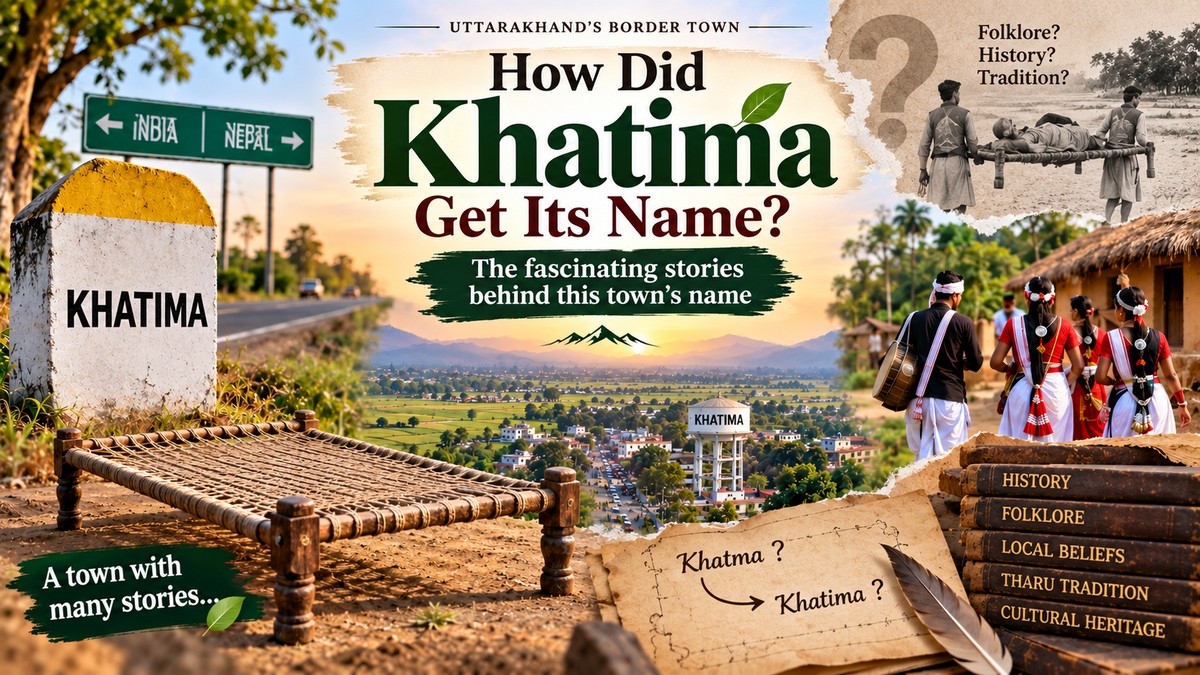
One interesting local belief connects the name with the traditional Indian khat, or cot.
The Terai was historically a heavily forested region, and diseases such as malaria and fever posed serious challenges in earlier times.
According to one local account, sick people sometimes had to be carried on a khat.
A story passed down locally connects this practice with a name resembling “Khatma”, which is then believed to have gradually evolved into “Khatima”.
However, there is no readily available authoritative historical document establishing this explanation as fact.
It should therefore be understood as local folklore rather than a confirmed etymology.
Another Story Connects the Name with Tharu Tradition
Khatima and the surrounding Terai belt have long been associated with the Tharu community.
Not surprisingly, another story about the town's name is linked with Tharu cultural traditions.
An older local account refers to a traditional wedding practice involving the groom and a khat, or cot.
Some people connect this use of the khat with “Khatma” and eventually the modern name “Khatima”.
Once again, the story is fascinating, but sufficient historical documentation has not been established to treat it as the definitive origin of the town's name.
So What Is the Real Origin of ‘Khatima’?
This is where the mystery becomes even more interesting.
For many old Indian towns and villages, historical records provide relatively clear explanations of how their names originated.
In Khatima's case, however, there does not appear to be a single explanation supported by enough authoritative evidence to be presented as unquestionable fact.
That leaves the stories involving the khat, the older form “Khatma”, and local Tharu traditions as part of the region's oral history and folklore.
Perhaps an old gazetteer, revenue record, map or another historical document may someday provide a more definitive answer.
Khatima's History Goes Far Beyond Its Name
Even if the exact origin of its name remains uncertain, the history of the region in which Khatima developed has many fascinating layers.
Today, Khatima is an important town of Udham Singh Nagar district.
But traces of an older Khatima can still be explored through its surrounding villages, Tharu heritage, forests, agriculture and border geography.
This is what makes discovering Khatima's history particularly interesting.
It is not simply a story of dates and official documents.
It is also a story preserved through the memories of generations.
Did Your Elders Tell You a Different Story?
The exact origin of the name Khatima deserves deeper historical research.
But local legends themselves are an important part of a town's cultural memory.
Families who have lived in Khatima and its surrounding villages for generations may still remember versions of the story that were never formally written down.
If your parents, grandparents or village elders ever told you how Khatima got its name, their version could be another valuable piece of the town's history.
Because sometimes the history of a place survives not only in old books and records, but also in the memories of the people who call it home.