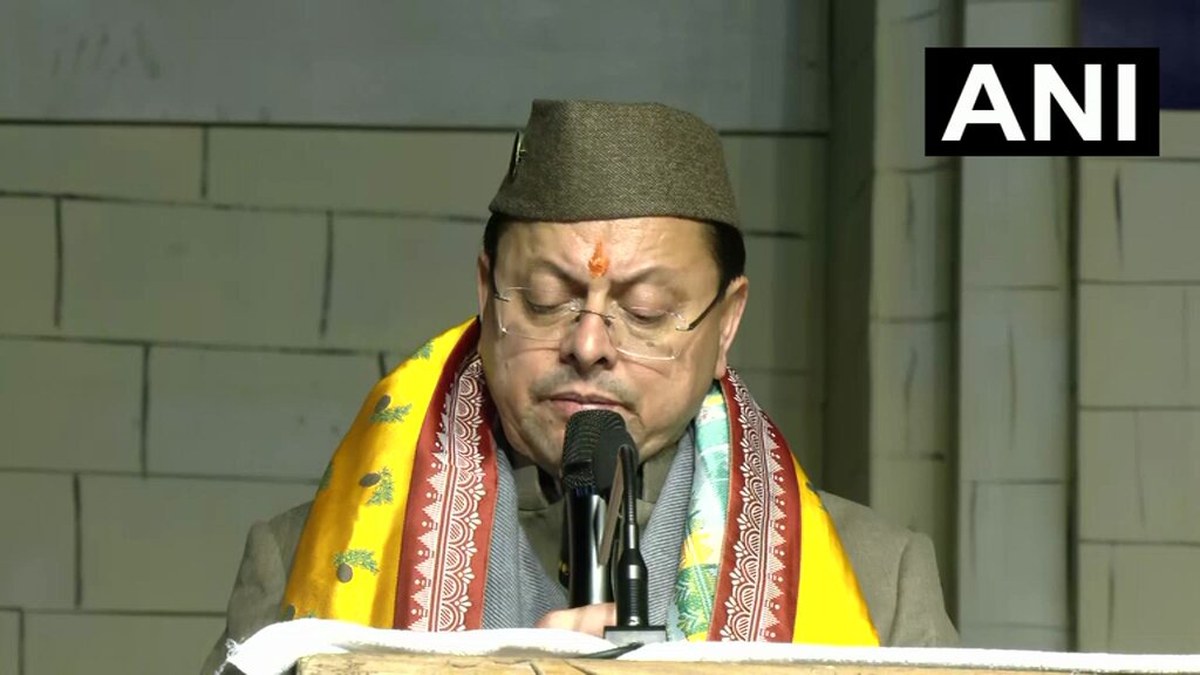

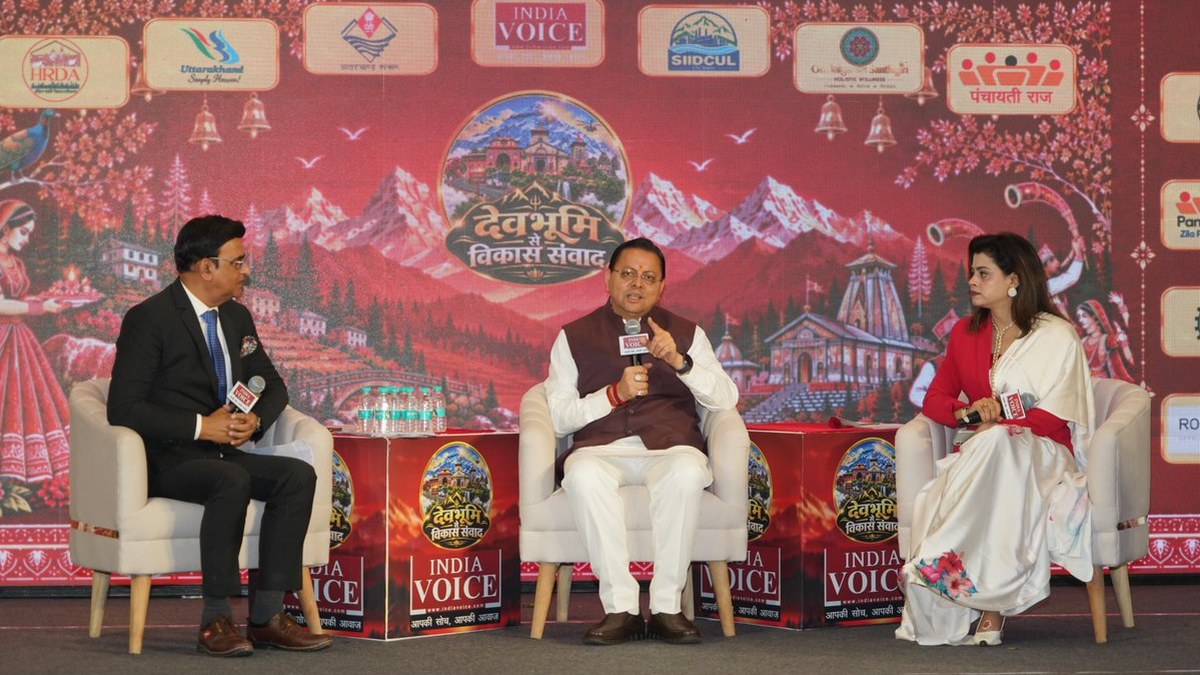
Uttarakhand Chief Minister Pushkar Singh Dhami presented the state government’s development priorities at the Devbhoomi Se Vikas Samvad Conclave at Hotel Fairfield in Dehradun on 30 October 2026. He discussed employment, women’s empowerment, tourism, migration, environmental protection and the preservation of the state’s cultural identity.
The chief minister said the government had introduced the country’s strictest anti-copying law to protect young people and make recruitment examinations transparent. According to Dhami, more than 35 thousand young people have been selected for government services through fair recruitment processes.
He said candidates from ordinary families had been able to progress on merit without recommendations, corruption or cheating. Dhami also referred to the state’s strict anti-conversion law and other decisions taken by the government.
Recruitment and youth employment
Dhami said filling vacant government s had been a priority since he took charge as chief minister in 2021. At that time, the state had an estimated backlog of approximately 24 thousand s, he said.
The government began recruitment on a priority basis, and more than 35 thousand young people have since received appointments in government services, according to the chief minister. He presented the recruitment figure as evidence of the administration’s focus on transparent selection.
Dhami also said the government wanted young people to find employment without having to leave their homes and villages. For this purpose, he identified tourism, self-employment, homestays, hotels, taxi operations, horticulture and start-ups as areas receiving support.
The approach links employment with local economic activity. It is intended to create livelihood opportunities within the state while supporting businesses and services connected with tourism and rural communities.
Women’s participation in the economy
The chief minister described women as central to Uttarakhand’s formation and development. In recognition of their contribution, the state government has provided 30 percent horizontal reservation for women in government jobs, he said.
Dhami said the government wanted women to receive equal opportunities and greater participation across sectors. He added that women’s economic independence would strengthen their contribution to the state’s development.
More than 3 lakh women are associated with self-help groups in Uttarakhand, according to the chief minister. These groups are working in self-employment and entrepreneurship, while demand for their local products is increasing in India and abroad.
Dhami said the House of Himalayas brand was giving Uttarakhand’s traditional products access to a wider market. The initiative connects women-led and locally produced goods with consumers beyond the state.
He also recalled Prime Minister Narendra Modi’s statement at Kedarnath Dham on 05 November, 2021, that the third decade of the 21st century would belong to Uttarakhand. Dhami said the determination, hard work and innovations of the state’s women strengthened his belief that they would help take Uttarakhand to new heights during this decade.
Border villages and balanced development
On the broader development agenda, Dhami said progress in development, innovation, science and technology must not stop. He said achievements should bring satisfaction, but also maintain the resolve to move further forward.
He highlighted the Vibrant Villages programme as an important effort to connect border areas with the mainstream of development. The programme is being advanced under Prime Minister Narendra Modi’s guidance, he said.
Dhami referred to the message that Mana should be recognised not as the country’s last village, but as its first village. He said this change in outlook had given fresh momentum to the development of infrastructure, roads, tourism and livelihood opportunities in border villages.
The chief minister’s remarks placed local employment, women’s enterprise and border-area development within a broader effort to reduce migration and strengthen opportunities inside Uttarakhand. He also included environmental protection and the preservation of the state’s original cultural character among the government’s stated priorities.
Conclusion
At the Dehradun conclave, Dhami linked Uttarakhand’s development agenda with transparent recruitment, women’s participation, local livelihoods, tourism, border connectivity and cultural preservation. The government’s stated next step is to continue expanding opportunities while maintaining momentum in development, innovation, science and technology.
Frequently Asked Questions
Q. Where was the Devbhoomi Se Vikas Samvad Conclave held?
It was held at Hotel Fairfield in Dehradun.
Q. What recruitment figure did Pushkar Singh Dhami highlight?
Dhami said more than 35 thousand young people had been selected or appointed to government services through transparent recruitment processes.
Q. What was the reported government-backlog in 2021?
Dhami said the state had an estimated backlog of approximately 24 thousand s when he took charge as chief minister in 2021.
Q. What reservation policy for women did Dhami mention?
He said the state government had provided 30 percent horizontal reservation for women in government jobs.
Q. How many women are linked to self-help groups in Uttarakhand?
Dhami said more than 3 lakh women are associated with self-help groups in the state.
Q. What is the House of Himalayas brand intended to do?
According to Dhami, it gives Uttarakhand’s traditional products access to a wider market in India and abroad.
Q. Which sectors did Dhami identify for local employment?
He mentioned tourism, self-employment, homestays, hotels, taxi operations, horticulture and start-ups.
Q. What role did Dhami assign to the Vibrant Villages programme?
He described it as important for connecting border villages with development, infrastructure, roads, tourism and livelihood opportunities.
Q. What did Dhami say about Mana village?
He referred to the message that Mana should be recognised as the country’s first village rather than its last village.