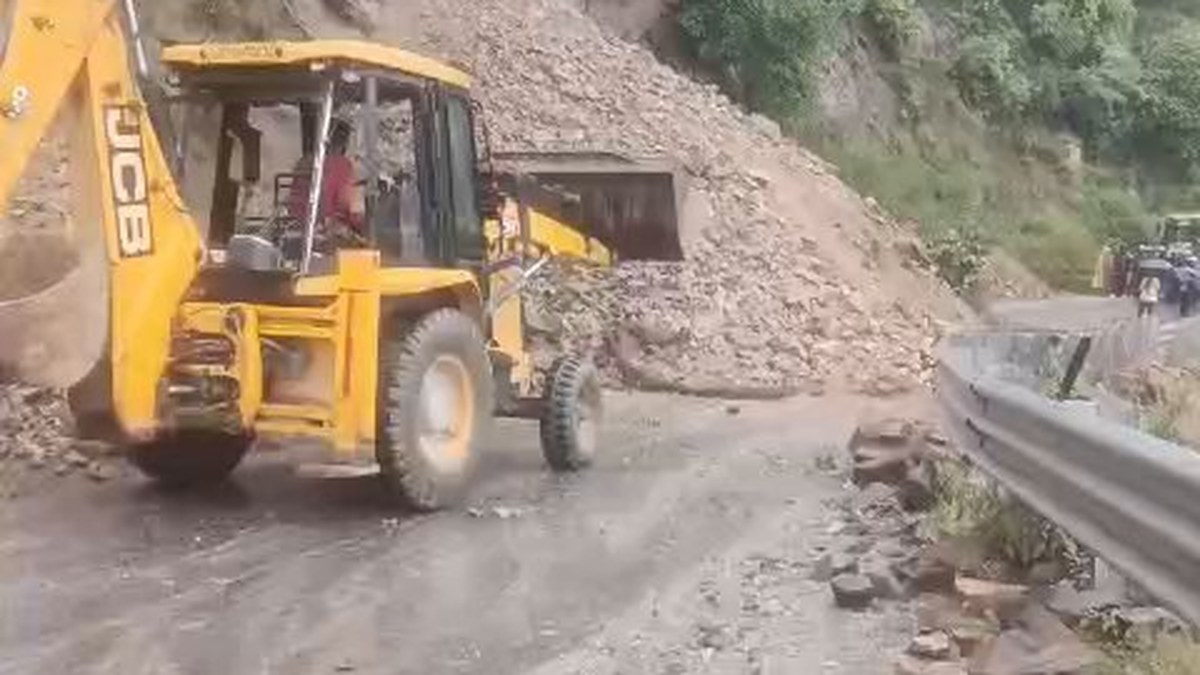

The Mohabbewala slope in Dehradun has recorded 15 accidents and 6 deaths this year, with trucks repeatedly involved in crashes on the route. Despite several safety measures, authorities have yet to identify an effective way to stop the incidents.
The National Highways Authority of India (NHAI) has assigned the Central Road Research Institute (CRRI) to survey the stretch between Dat Kali Tunnel and Mohabbewala. CRRI has asked for 2 months to submit its report.
The Transport Department has separately engaged JPRI for a survey. That organisation has reportedly completed its report, but the findings have not been made public. This leaves questions about what immediate measures will protect road users while the latest survey is pending.
Why the new alignment is drawing attention
The available comparison between the earlier and current alignments highlights major differences in the road’s gradient and design.
On the old route, the gradient was lower and vehicle speeds were controlled in stages, generally remaining around 20 to 30 kilometres per hour. Its 5 bends made the road highly winding and acted as natural speed controls. The risk of brake overheating was described as very low because vehicles had time for the brakes to cool.
The earlier route’s reported main accident risk was its narrow width and attempts to overtake. By contrast, the new route has a continuous, steep descent where vehicle speeds can reach up to 80 km per hour. Its straighter and wider layout can encourage faster driving.
The new alignment is also associated with a much higher risk of brake overheating. The reported concern is that continuous downhill travel can lead to brake failure and loss of control.
Audits, barriers and enforcement
NHAI’s project director said a third-party audit had also been conducted a few days earlier. According to the account, the auditing organisation found no defect in the design and suggested considering other options to prevent crashes.
The audit reportedly placed greater responsibility on the police department. It recommended increasing police deployment and strengthening enforcement on the route as a way to reduce accidents.
Authorities have already installed warning boards and zigzag barriers. However, crashes have continued despite those interventions, adding to uncertainty over what further action can be taken without major engineering work.
Transport Deputy Commissioner Shailesh Tiwari said no agency had identified a defect in the design. He said precautionary steps had been taken on the recommendations of several agencies, but the continuing accidents required a fresh assessment.
Tiwari also said measures beyond those already implemented would not be possible without major engineering changes. The immediate challenge is therefore to determine whether enforcement, traffic control or another engineering solution can reduce the danger before the pending survey is completed.
Conclusion
The Mohabbewala slope has seen 15 accidents and 6 deaths this year, while agencies continue to examine the causes. CRRI’s survey is expected after the requested 2-month period, and the JPRI report has not yet been made public.
Frequently Asked Questions
Q. Where have the accidents been occurring?
The reported incidents have occurred on the Mohabbewala slope between Dat Kali Tunnel and Mohabbewala in Dehradun.
Q. How many accidents and deaths have been reported this year?
The stretch has recorded 15 accidents and 6 deaths this year.
Q. Which organisation is conducting the NHAI survey?
The National Highways Authority of India has engaged the Central Road Research Institute for the survey.
Q. How much time has CRRI requested for its report?
CRRI has requested 2 months to submit its survey report.
Q. What is the status of the JPRI report?
JPRI has reportedly prepared its report, but it has not been made public.
Q. What safety measures have already been installed?
Warning boards and zigzag barriers have been installed on the route.
Q. What did the third-party audit reportedly find?
The auditing organisation reportedly found the design to be in order and suggested considering other options to prevent accidents.
Q. What did Transport Deputy Commissioner Shailesh Tiwari say?
Shailesh Tiwari said no agency had identified a design defect and that further measures would require major engineering changes.