
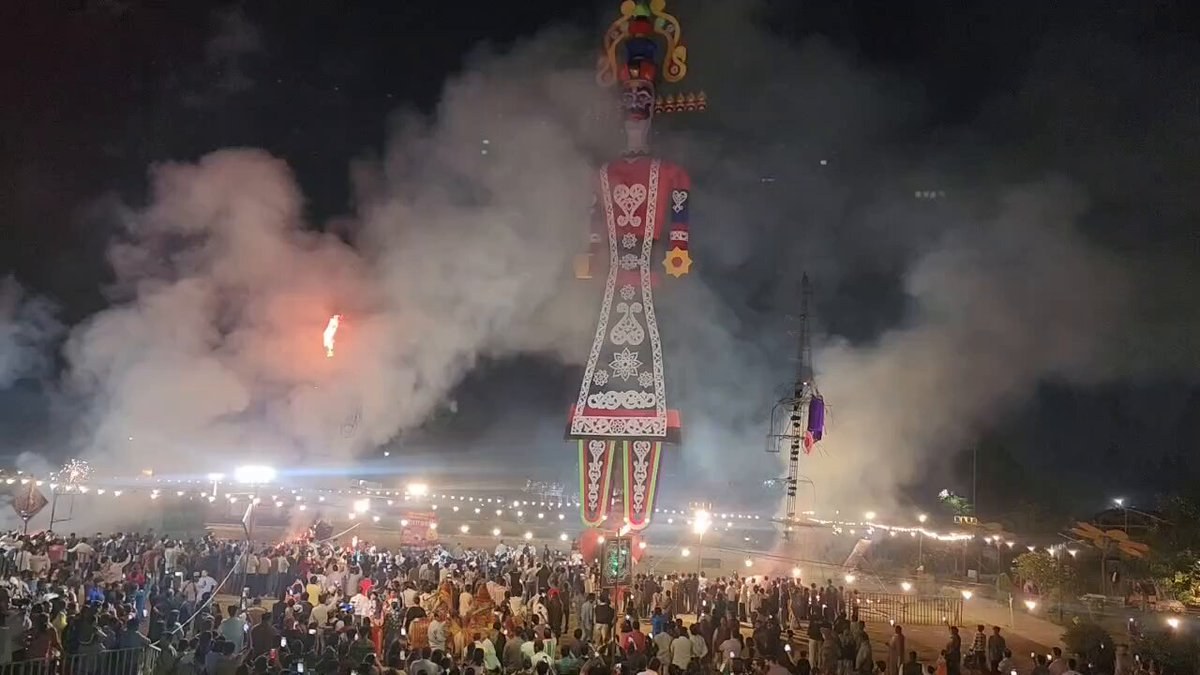
A planned remote-controlled finale for Dehradun’s 181-foot Ravan effigy failed at the crucial moment, forcing organisers to use a torch instead at Parade Ground.
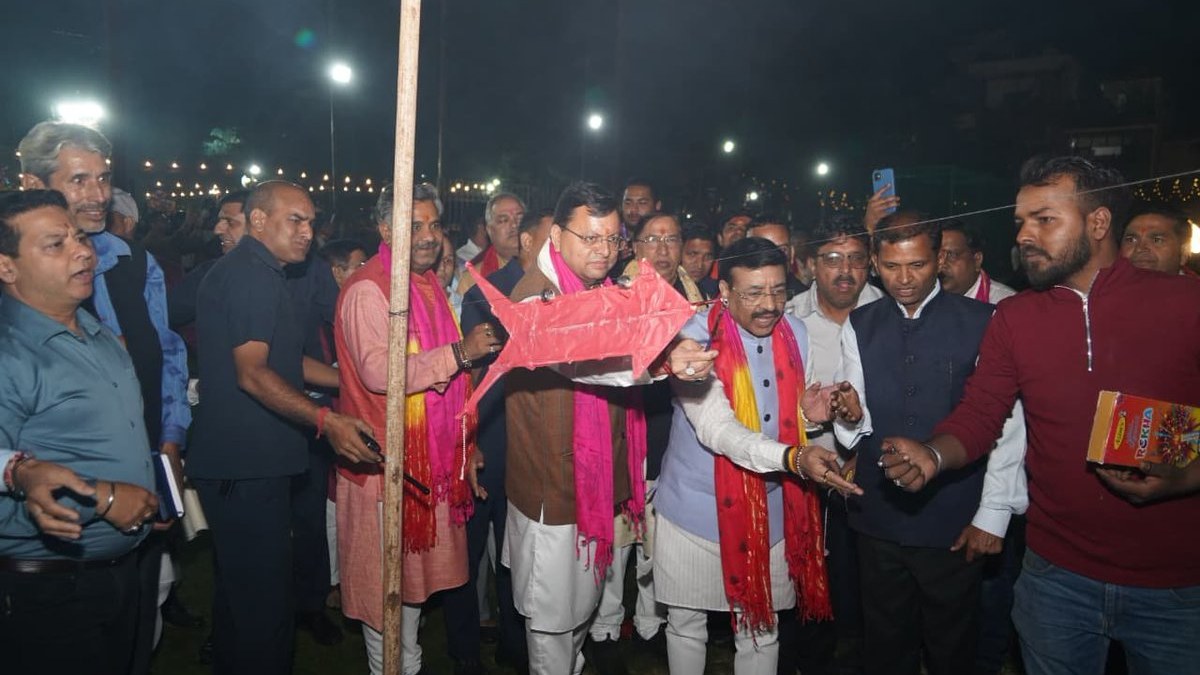
The effigy had been prepared for ignition through a remote system. However, its sensors failed when the burning ceremony was due to begin. Organisers then changed their approach and lit Ravan manually.
Remote system fails during ceremony
The incident was captured in a video shared from Parade Ground, Dehradun. It shows the organisers abandoning the intended remote-controlled method and using the traditional torch-based process.
The technical failure created an unexpected moment during the ceremony. The planned system was intended to keep the ignition process remote, but the organisers had to rely on the conventional method after the sensors stopped responding.
The 181-foot height made the effigy a prominent feature at the venue. The failed remote ignition became the main development as the organisers worked to complete the burning ceremony without the planned technology.
No information was provided about the cause of the sensor failure, the equipment used, or whether the system was tested again after the manual ignition. The available report also does not identify the organisers or provide details about any damage or disruption caused by the malfunction.
Conclusion
Dehradun’s 181-foot Ravan was meant to be set alight remotely, but sensor failure forced organisers at Parade Ground to complete the ceremony with a torch.
Frequently Asked Questions
Q. How tall was the Ravan effigy?
The Ravan effigy was 181 feet tall.
Q. Where did the incident occur?
It occurred at Parade Ground in Dehradun.
Q. How was the effigy supposed to be ignited?
It was supposed to be set on fire using a remote-controlled system.
Q. What went wrong with the remote ignition?
The sensors failed when the ignition was needed.
Q. How did organisers light the effigy?
They used a torch instead of the remote-controlled system.