
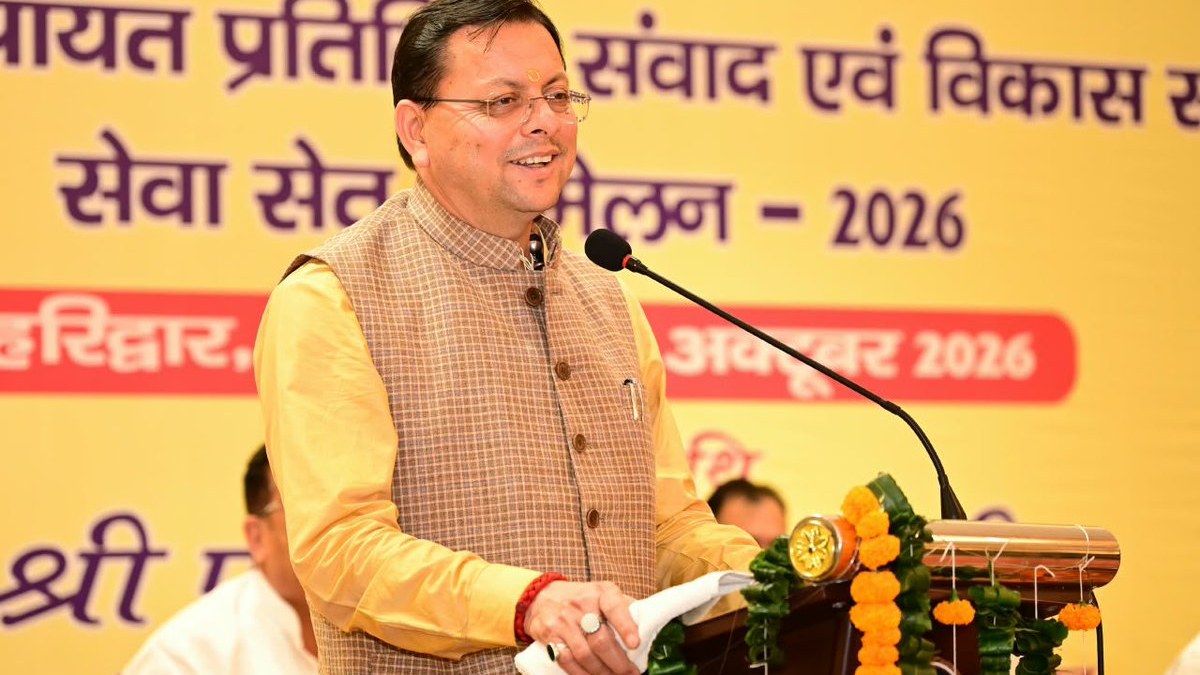
Uttarakhand Chief Minister Pushkar Singh Dhami has called on panchayat representatives to take greater responsibility for village development and ensure that public schemes reach every eligible family.
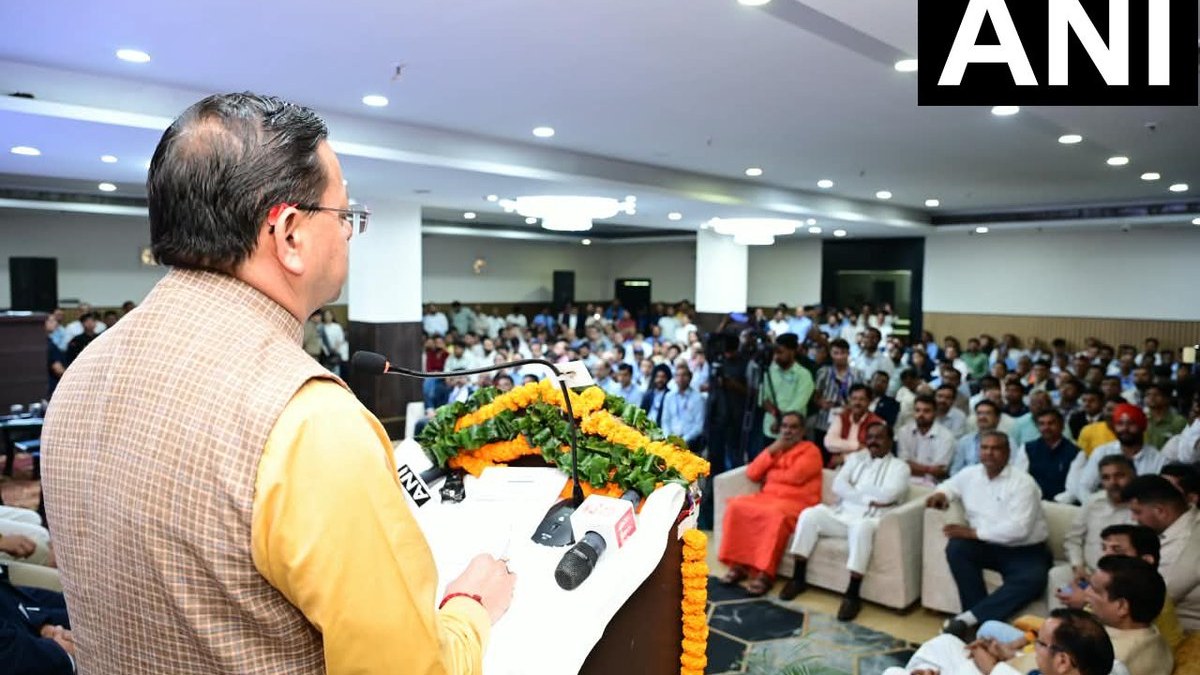
Dhami made the appeal in Haridwar while attending a one-day orientation and training programme for representatives of the state’s 3-tier panchayati raj system. More than 60,000 representatives were connected with the training programme simultaneously across all development blocks.
The chief minister described empowered panchayats as the strong foundation of a developed Uttarakhand. He said elected representatives understand local problems closely and serve as an important link between the government and the public.
Focus on planning and basic services
Dhami urged representatives to work with the approach of “My village, my responsibility”. He said they should provide people with information about government schemes and help eligible residents receive their benefits.
He said village, block and district panchayats are preparing development plans under the Jan Yojana Abhiyan, which began on 2 October 2026. The plans, he said, should reflect local needs, public suggestions and available resources.
Each panchayat should set clear targets, deadlines and expected outcomes for its work. Dhami also asked representatives to collect suggestions in gram sabhas and regularly review the progress of approved projects.
Panchayat development plans should clearly cover drinking water, roads, sanitation, education and healthcare. Representatives were asked to check which families are actually benefiting from schemes and give special priority to vulnerable and disadvantaged groups.
Digital records and public accountability
Dhami said that more than 56,000 panchayat representatives received training during 2025-26. Of Uttarakhand’s 7,817 gram panchayats, 5,972 panchayat buildings are operating as gram secretariats.
Over the past 5 years, 1,362 panchayat buildings have been constructed and 584 have been repaired. More than 1,000 gram panchayats have also been computerised, according to the figures cited at the programme.
The chief minister said panchayat work plans, financial and physical progress, and geotagging of projects are being recorded through the e-Gram Swaraj portal. He said digital panchayats are intended to make administration more transparent, simple and effective.
“Panchayat money is public money,” Dhami said, stressing that every rupee should be accounted for before the people. He said the impact and quality of development work matter more than the number of projects.
He specifically highlighted the need to monitor road quality, the usefulness of drinking-water schemes and the services delivered through panchayat buildings.
Sanitation and rural livelihoods
Dhami said panchayats have a major role in creating clean and healthy villages. District panchayats have been provided waste-collection machines for cleaning rural motor roads and local markets, while special machines have also been installed at the development-block level.
He called for sanitation to be linked with public participation and urged regular cleaning in villages.
The chief minister also pointed to self-help groups, women’s entrepreneurship, agriculture, horticulture, local products and tourism as areas that can strengthen the rural economy. Increasing employment and self-employment opportunities in villages, while reducing migration, remains a government priority, he said.
He also referred to steps including 30% horizontal reservation for women in government jobs and called for equal attention to preserving the cultural heritage of villages.
Conclusion
The training programme placed responsibility for village-level planning, service delivery, transparency and accountability on elected panchayat representatives. Dhami said applying the training in practice could give rural development new momentum and support the goal of a developed Uttarakhand.
Frequently Asked Questions
Q. Where was the panchayat training programme held?
The one-day orientation and training programme was held in Haridwar.
Q. How many representatives were connected with the training programme?
More than 60,000 panchayat representatives were connected with training across all development blocks.
Q. What is the Jan Yojana Abhiyan mentioned at the programme?
It is an initiative that began on 2 October 2026 for preparing development plans at the village, block and district panchayat levels.
Q. How many gram panchayats operate as gram secretariats?
Of the state’s 7,817 gram panchayats, 5,972 panchayat buildings operate as gram secretariats.
Q. What digital system is being used to track panchayat work?
The e-Gram Swaraj portal is being used for work plans, financial and physical progress, and geotagging of projects.
Q. Which basic services should panchayat plans include?
The plans should clearly address drinking water, roads, sanitation, education and healthcare.
Q. What rural activities did Dhami identify as economic priorities?
He highlighted self-help groups, women’s entrepreneurship, agriculture, horticulture, local products and tourism.