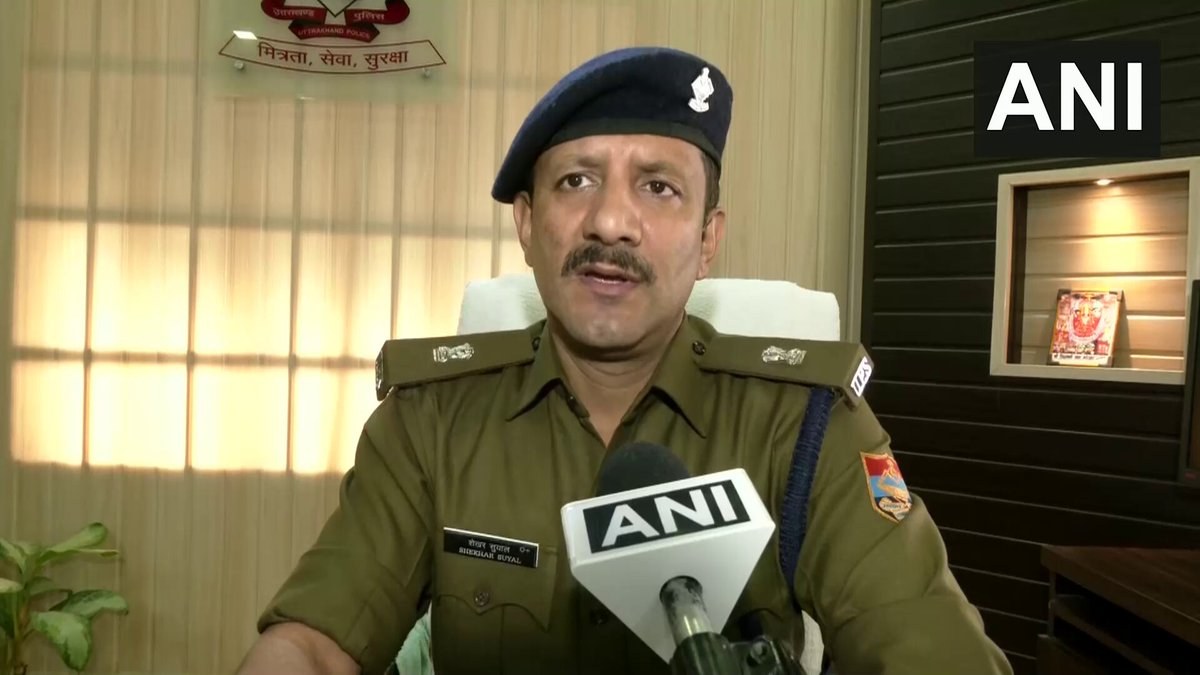


Uttarakhand Chief Minister Pushkar Singh Dhami has challenged Samajwadi Party president Akhilesh Yadav over an alleged remark describing people from Uttarakhand as infiltrators. Dhami said the comment insulted the state’s dignity, history and the sacrifices made during the movement for separate statehood.
Dhami said Uttarakhand is both a land of spirituality and a land of bravery. He pointed to the state’s contribution of saints, soldiers and people dedicated to national service, arguing that its residents should not be portrayed in a derogatory manner.
The chief minister also noted that Akhilesh Yadav’s wife is from Kashipur in Uttarakhand. He used that connection while questioning the Samajwadi Party leader’s reported remarks about people from the state.
Dhami invokes Rampur Tiraha firing
The chief minister linked the political controversy to the history of Uttarakhand’s statehood movement. He recalled the Rampur Tiraha firing in Muzaffarnagar, where police opened fire on activists demanding a separate Uttarakhand when Akhilesh Yadav’s father, Mulayam Singh Yadav, was Uttar Pradesh chief minister.
Dhami said that referring to Uttarakhand residents as infiltrators was not merely a political comment. In his view, it also disrespected the movement, its participants and the sacrifices associated with the demand for a separate state.
The reference has brought the movement’s history back into the current political debate. The Rampur Tiraha episode remains among the most sensitive events associated with the agitation, while the broader movement continues to shape Uttarakhand’s political and social identity.
Congress asked to clarify its position
Dhami also targeted the Congress over its political association with the Samajwadi Party. He asked whether Congress supports Akhilesh Yadav’s alleged statement and whether it accepts describing people from Uttarakhand as infiltrators.
The chief minister said Congress should answer the people of Devbhoomi. His questions have placed both the Samajwadi Party and Congress in the debate, with the full context of Akhilesh Yadav’s alleged statement and Congress’s response now central to the political exchange.
Memories of the 1994 firing incidents
The report also recalls the firing in Mussoorie on 2 September 1994, during the Mulayam Singh Yadav government. Police opened fire on Uttarakhand statehood activists at Jhoolaghar, killing 6 movement participants and injuring about 18 people. The then police circle officer, Umakant Tripathi, also died in the incident.
The firing followed anger in Mussoorie after 7 activists were killed in police firing at Khatima on 1 September 1994. News of the Khatima incident reached Mussoorie the next day, prompting people to gather at the Mussoorie Library before moving towards Jhoolaghar on Mall Road while raising slogans.
The 6 movement activists killed in the Mussoorie firing were Belmati Chauhan, Hansa Dhanai, Balbir Singh Negi, Dhanpat Singh, Madan Mohan Mamgain and Rai Singh Bangari. Tripathi also died during the firing.
Sanjeev Chauhan, who was 16 and a high-school student at the time, was among those affected. Originally from Kandakhhal village in Tehri, he lived with his family in Mussoorie’s Bakery Hill and was hit by 5 bullets at Jhoolaghar.
Wider movement and pending cases
Police firing during the 1994 statehood movement was reported not only in Mussoorie and Khatima, but also in Muzaffarnagar, Dehradun, Kotdwar, Nainital and Srinagar. More than 40 movement activists were killed in these incidents, according to the supplied report.
Statehood activists have said cases were registered against officials accused of responsibility for firing on unarmed demonstrators. However, several cases remain pending in courts even after more than 3 decades, and the absence of convictions continues to be raised by movement activists.
The dispute over Akhilesh Yadav’s alleged remark therefore carries significance beyond the immediate political exchange. Dhami has tied it to the memories of the statehood movement, while his questions have also sought a response from Congress.
Conclusion
Dhami has framed the alleged ‘infiltrator’ remark as an insult to Uttarakhand’s people and statehood struggle, while invoking the Rampur Tiraha and 1994 firing incidents. The political focus now remains on the context of Akhilesh Yadav’s statement and Congress’s position.
Frequently Asked Questions
Q. What did Pushkar Singh Dhami object to?
Dhami objected to an alleged remark referring to people from Uttarakhand as infiltrators. He said it insulted the state’s dignity and its statehood movement.
Q. Which historical incident did Dhami recall?
He recalled the Rampur Tiraha firing in Muzaffarnagar during the period when Mulayam Singh Yadav was Uttar Pradesh chief minister.
Q. What happened in Mussoorie on 2 September 1994?
Police opened fire on statehood activists at Jhoolaghar in Mussoorie. 6 activists and the then police circle officer Umakant Tripathi died, while about 18 people were injured.
Q. What happened in Khatima on 1 September 1994?
Police firing during a statehood demonstration killed 7 activists, according to the supplied report.
Q. What questions did Dhami ask Congress?
He asked whether Congress supports Akhilesh Yadav’s alleged statement and whether it accepts describing people from Uttarakhand as infiltrators.
Q. How many activists were killed across the 1994 incidents mentioned?
The report states that more than 40 movement activists were killed in firing incidents in several places, including Mussoorie, Khatima, Muzaffarnagar, Dehradun, Kotdwar, Nainital and Srinagar.
Q. What is the status of cases linked to the firing incidents?
Statehood activists say several cases remain pending in courts more than 3 decades after the incidents.