
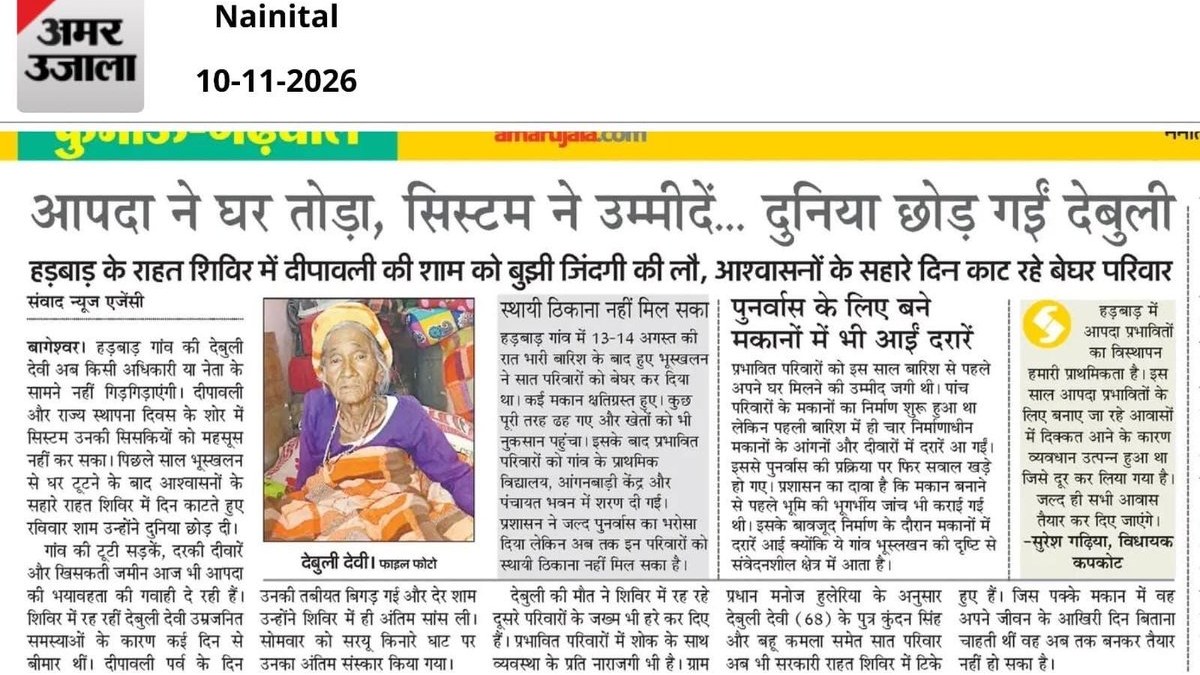
Debuli Devi, 68, from Debuli village in Bageshwar, died on Diwali evening after spending the period since the August 2025 disaster in a relief camp. Her home had been destroyed, and she was still waiting to return to permanent housing.
The account, shared by KumaonJagran, has drawn attention to the continuing difficulties faced by families displaced by disasters in Uttarakhand. For people who lose their homes, the crisis continues long after the immediate emergency fades from public attention.
Rehabilitation remains a long-term challenge
Debuli Devi’s experience reflects the gap between emergency relief and permanent rehabilitation. A relief camp can provide temporary shelter, but rebuilding a home and restoring a stable life may take years.
The circumstances described in her case also underline the personal cost of delays faced by displaced families. For those living away from their homes, uncertainty can continue through everyday challenges involving shelter, stability and the effort to start again.
The account does not provide details about the wider number of affected families, the rehabilitation process or the authorities responsible for permanent housing. It does, however, keep attention on the need to remember disaster survivors after the immediate crisis has passed.
Conclusion
Debuli Devi’s death in a relief camp, after her home was destroyed in the August 2025 disaster, highlights why the rehabilitation of displaced families in Uttarakhand cannot be forgotten once emergency coverage ends.
Frequently Asked Questions
Q. Who was Debuli Devi?
Debuli Devi was a 68-year-old resident of Debuli village in Bageshwar.
Q. Why had she been living in a relief camp?
She had been living there since her home was destroyed in the August 2025 disaster.
Q. When did Debuli Devi die?
She died on Diwali evening.
Q. What does her story highlight?
It highlights the continuing hardship of disaster-affected families waiting for permanent rehabilitation and stable homes.