
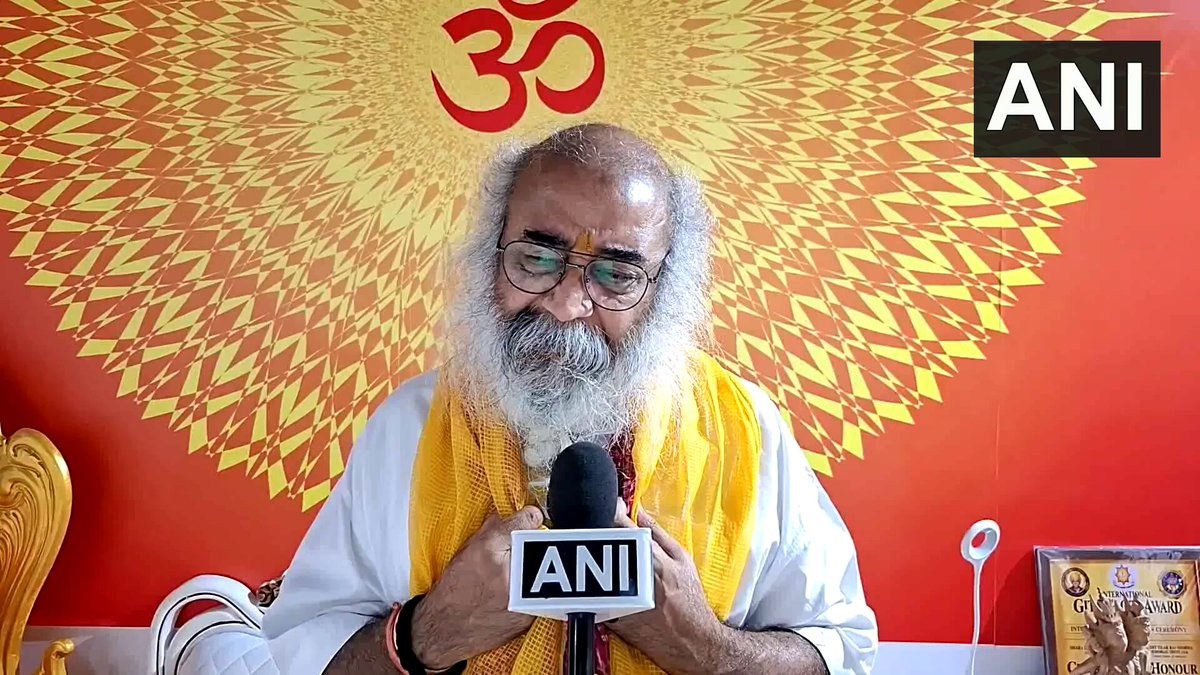
Acharya Pramod Krishnam has criticised Congress president Mallikarjun Kharge over remarks concerning Prime Minister Narendra Modi’s late father. The comments were made in Haridwar, Uttarakhand, in a video report carried by ANI.
Krishnam, identified as the Peethadhishwar of Shri Kalki Dham, accused Kharge of insulting the Prime Minister’s late father. He also objected to the manner in which he said the remarks were made.
What Acharya Pramod Krishnam said
Krishnam compared Kharge’s alleged language with the conduct of Ravana in the Ramayana. He said Ravana had insulted Lord Rama and claimed that Kharge was using “the very same kind of language”.
He further said, “This signifies that the burning of Lanka is inevitable...” The statement was framed as a sharp political and religious criticism of the Congress president.
The available report does not provide the full remarks by Kharge that prompted Krishnam’s response. It also does not include a response from Kharge or the Congress to the comments.
The incident reflects the use of religious references in political exchanges involving senior leaders. However, the available material contains only Krishnam’s statement and does not establish any further political or administrative consequence.
Conclusion
In Haridwar, Acharya Pramod Krishnam criticised Mallikarjun Kharge over remarks about Prime Minister Narendra Modi’s late father, comparing the language to Ravana’s insult of Lord Rama and invoking the “burning of Lanka”.
Frequently Asked Questions
Q. Who criticised Mallikarjun Kharge?
Acharya Pramod Krishnam, identified as the Peethadhishwar of Shri Kalki Dham, criticised Kharge.
Q. Where were the comments made?
The comments were made in Haridwar, Uttarakhand.
Q. What issue was Krishnam responding to?
He was responding to remarks by Kharge concerning Prime Minister Narendra Modi’s late father.
Q. What comparison did Krishnam make?
He compared Kharge’s alleged language with Ravana’s insult of Lord Rama.
Q. What did Krishnam say was inevitable?
He said the remarks signified that “the burning of Lanka is inevitable...”