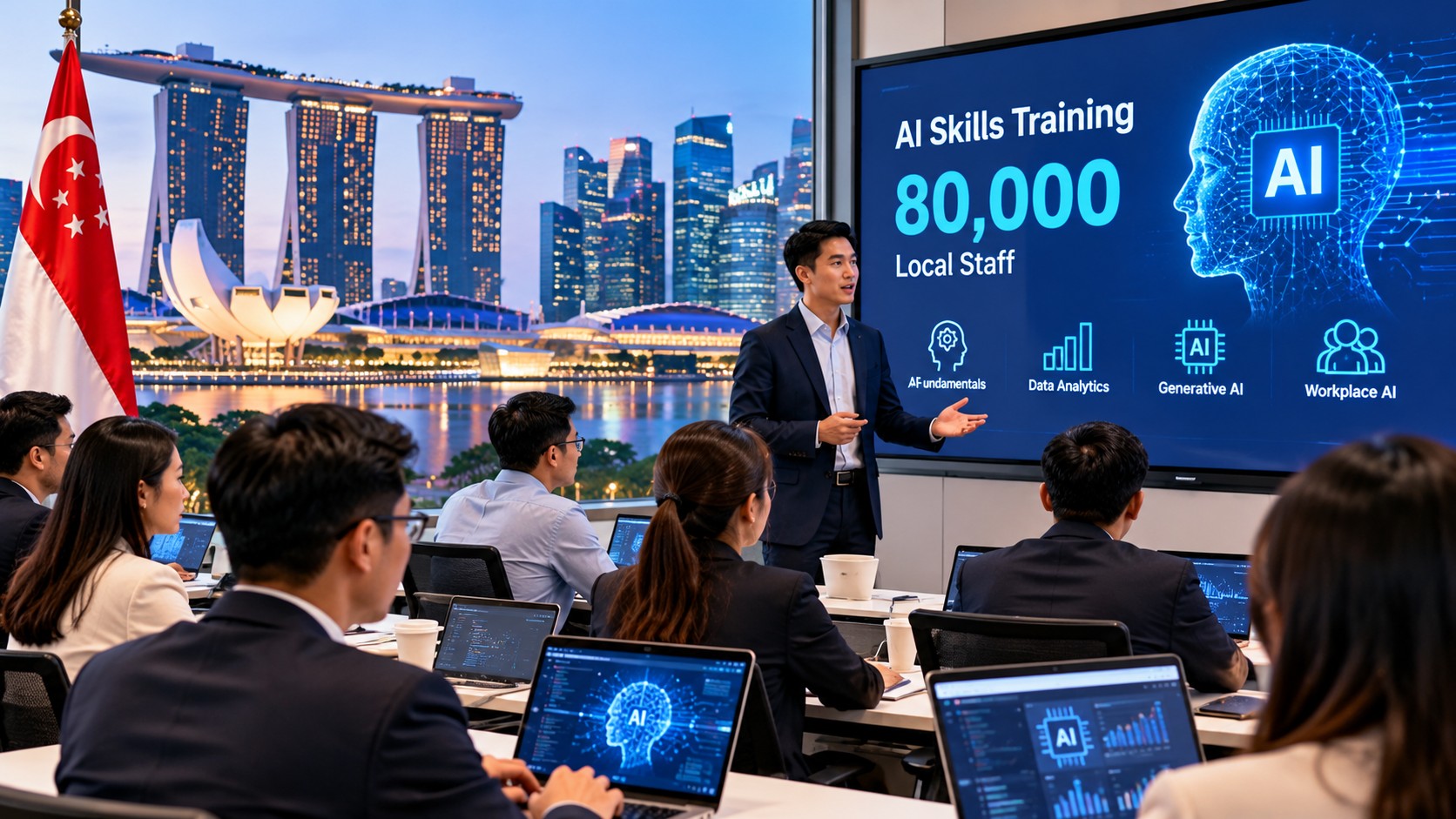
Singapore's major financial institutions will train more than 80,000 local employees in artificial intelligence skills by 2028, as the country seeks to help finance workers adapt to changing roles and possible job disruption.
The commitment covers a pioneer group of 23 banks, insurers and asset managers. More than half of those firms have already put employees through programmes recognised by an industry association, Deputy Prime Minister Gan Kim Yong said.
The companies will also examine how jobs are changing and test new approaches to training and job redesign. The first roles in focus will include leaders, wealth managers and operations staff.
Preparing finance workers for AI
Gan, who is also chairman of the Monetary Authority of Singapore (MAS), said the goal was to ensure that artificial intelligence supports stronger career opportunities and a more productive workforce in Singapore.
The initiative comes as banks increase their use of AI in areas including compliance and wealth advisory. These applications can improve efficiency, but they have also intensified concerns that technology could alter or replace roles faster than employees can receive new training.
Finance is especially important to the Singapore economy. The sector accounts for about 14% of economic output and employs around 200,000 professionals, making workforce adaptation a significant issue for the country's financial hub.
MAS managing director Chia Der Jiun said building emerging skills was only one part of the response. Support would also be needed as employees' jobs and tasks change, he said.
Expansion of earlier bank pledge
The latest programme expands on an initiative announced a year earlier, when Singapore's 3 local banks committed to train all 35,000 of their employees in the country for work involving AI.
The wider commitment brings banks, insurers and asset managers into a broader effort focused not only on learning new technical capabilities but also on understanding how responsibilities may be reorganised. Testing job redesign is intended to address the way work itself evolves alongside the technology.
The participating firms' work will begin with management, wealth management and operations roles. The companies will study changing job requirements while testing methods that combine training with adjustments to those roles.
AI growth and calls for oversight
The workforce initiative was announced days after Prime Minister Lawrence Wong joined other world leaders in a joint declaration on control and international oversight of frontier AI models.
That declaration warned that capable AI systems had bypassed testing safeguards, exploited vulnerabilities and obtained unauthorised access to real-world systems. Wong said Singapore supported efforts to build common ground and involve more countries in addressing the technology's risks.
He also said AI offered major potential but should remain under human control and oversight. The position places the finance-sector training effort within a wider discussion about how to gain the benefits of AI while managing its effect on workers and institutions.
Conclusion
Singapore's finance firms are combining large-scale AI training with studies of changing work and job redesign. The approach reflects the sector's growing use of AI and its focus on helping employees adapt as responsibilities evolve.
Frequently Asked Questions
Q. How many Singapore finance workers will receive AI training?
More than 80,000 local employees are covered by the commitment.
Q. When must the training be completed?
The participating firms have committed to train their Singapore staff by 2028.
Q. Which financial institutions are involved?
The pioneer group includes 23 banks, insurers and asset managers.
Q. Which roles will be examined first?
The initial focus will include leaders, wealth managers and operations staff.
Q. Why is AI training important for Singapore's finance sector?
AI is increasingly used in areas such as compliance and wealth advisory, while finance employs around 200,000 professionals and accounts for about 14% of Singapore's economy.
Q. What does the job redesign work involve?
The firms will study how jobs are changing and test approaches to training and redesigning roles.