
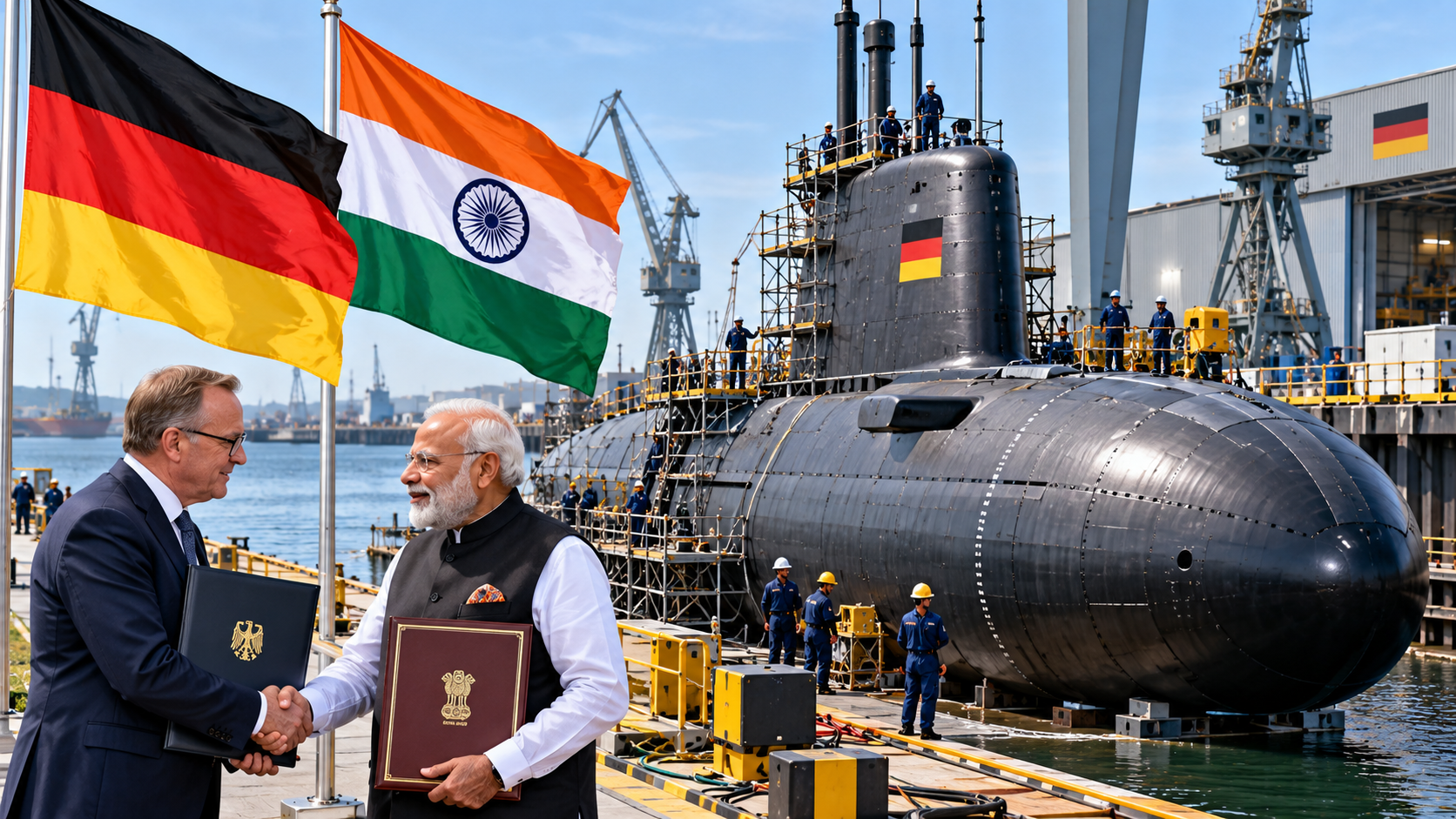
Germany is ready to sign the proposed submarine agreement with India, but the deal cannot move forward until Indian approval procedures are completed. German ambassador-designate Dr. Jasper Wieck said the German side has approved all documents, including the government agreement, and is now waiting for clearance from India.
The pending process includes approval from the Cabinet Committee on Security, or CCS. The proposed arrangement comes under Project 75(I), a long-delayed Indian Navy programme for building 6 advanced conventional submarines in India.
Who will build the submarines?
Mazagon Dock Shipbuilders Limited, or MDL, is expected to build the submarines in partnership with German shipbuilder ThyssenKrupp Marine Systems, known as TKMS. The 2 companies signed a cooperation agreement in June 2023, while formal discussions on the deal began in September 2025.
The estimated project cost has been reported at between ₹70,000 crore and ₹90,000 crore. The final value depends on the reported assessment of the programme. Because of its scale, the proposal requires careful consideration during India's approval process.
Why Project 75(I) matters
The programme is designed to provide the Indian Navy with 6 conventional submarines equipped with Air-Independent Propulsion, or AIP. This technology enables a submarine to remain underwater for longer without surfacing to recharge its batteries.
The planned capability is expected to support the Navy's underwater operations while expanding India's submarine-building expertise. The project also involves opportunities for technology transfer, local manufacturing and joint development between Indian and German companies.
Dr. Wieck described defence-industrial cooperation as an important part of the India-Germany strategic partnership. He also pointed to possible cooperation in drones, unmanned systems and advanced sensors.
What happens next?
The German side has completed its preparations, while the proposal awaits Indian clearances. Once the required approvals, including CCS clearance, are completed, the agreement can be signed and construction can begin.
For India, the project is linked to strengthening underwater naval capability and expanding domestic defence production. For Germany, it represents deeper cooperation with a strategic partner in Asia. The programme is also expected to make use of MDL's shipbuilding capacity and create opportunities connected with submarine construction.
Conclusion
The Project 75(I) deal has reached a stage where Germany is ready to proceed, but Indian approvals remain necessary before signing and construction can start. Its significance lies in combining submarine capability with technology transfer, local manufacturing and wider defence-industrial cooperation.
Frequently Asked Questions
Q. What is Project 75(I)?
Project 75(I) is an Indian Navy programme for building 6 advanced conventional submarines in India.
Q. Which companies are involved in the submarine project?
Mazagon Dock Shipbuilders Limited and ThyssenKrupp Marine Systems are expected to work together on the construction programme.
Q. What approval is the submarine deal waiting for?
The proposal is awaiting Indian approval procedures, including clearance from the Cabinet Committee on Security.
Q. What is the reported cost of Project 75(I)?
The reported project cost is between ₹70,000 crore and ₹90,000 crore.
Q. What is the role of AIP technology?
Air-Independent Propulsion allows submarines to remain underwater for longer without surfacing to recharge their batteries.
Q. When can construction begin?
Construction can begin after the required Indian approvals are completed and the agreement is signed.